• Skip to main content
  • Skip to primary sidebar
  • Skip to footer

Elite Car Customs

Reading PA's expert for fun and functional upgrades for your ride!

1176 Park Rd Unit A10, Reading, PA 19605 484-671-2343
  • Home
  • Services
    • Car Audio
    • Remote Starters
    • Driver Safety
    • Window Tint
  • About Us
  • Location
  • Contact Us
  • Facebook
  • Instagram
  • Search

Jerrod Pfeffer

Vehicle Security Systems Explained

Vehicle SecurityWee-ooh, wee-ooh, honk, honk, honk, beep, beep, beep … Ah, the sweet melody of the modern car alarm. Vehicle security is big business. If you are worried about someone stealing your vehicle, visit your local mobile enhancement retailer and ask about a properly designed and installed vehicle security system. Before you head out the door, let’s take a look at the options for security systems and sensors, and talk about the importance of proper installation to ensure your car remains where you left it.

The Classic Car Alarm
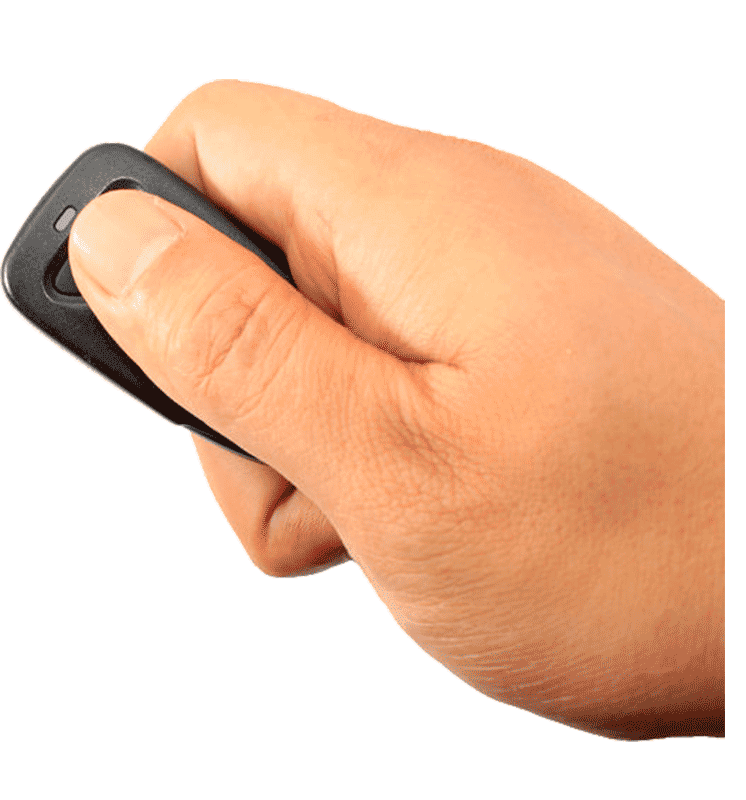
Vehicle SecurityIn most cases, a handheld remote control, also known as a key fob, will control your car alarm. These remotes use radio frequency signals to communicate with the control module in the vehicle. When you want to arm the alarm, press the Lock button on the remote and the system will respond almost instantly.

Remotes are available in many different styles. The simplest include a single button that toggles arming and disarming functions. A slightly more-elaborate remote may include dedicated locking, unlocking, trunk release and auxiliary output buttons. Many alarms are integrated with a remote car starter or vice versa. In these systems, one of the buttons on the remote is typically dedicated to starting the vehicle.

The Purpose of a Vehicle Security System

Quite simply, the purpose of an alarm is to monitor your vehicle for attempted theft or vandalism. When the system detects a trigger from a particular zone or sensor, it activates a loud siren. Depending on your vehicle, you can opt to have the horn honk and the parking lights flash when the alarm goes off.

That infamous blinking red or blue LED in your dash is an indication to would-be thieves that you have taken measures to protect your vehicle and belongings. The knowledge that there is an alarm in the vehicle may be an adequate deterrent that convinces a thief to move on to a different target.

Remote Car Starter Functions

We mentioned that security systems are a popular option for a remote car starter. Some manufacturers offer a separate remote starter, security and hybrid (remote starter and security) systems. Other companies have designed their remote starters to accept a siren and shock sensor as options. This modular approach allows you to upgrade the system at any time.

Zones of Protection

Modern security systems are capable of monitoring several zones or sensors simultaneously. For example, your alarm will be connected to your door’s pin wires. These same wires signal the dome light to turn on when a door is open. If the system detects a door is open, it will trigger the alarm instantly.

Many security systems include separate inputs for hood and trunk monitoring. Your installer may choose to use a pin switch on the hood or trunk, or a mercury switch. If your vehicle has factory monitoring for the hood or trunk, those connections are often compatible with an aftermarket security system.
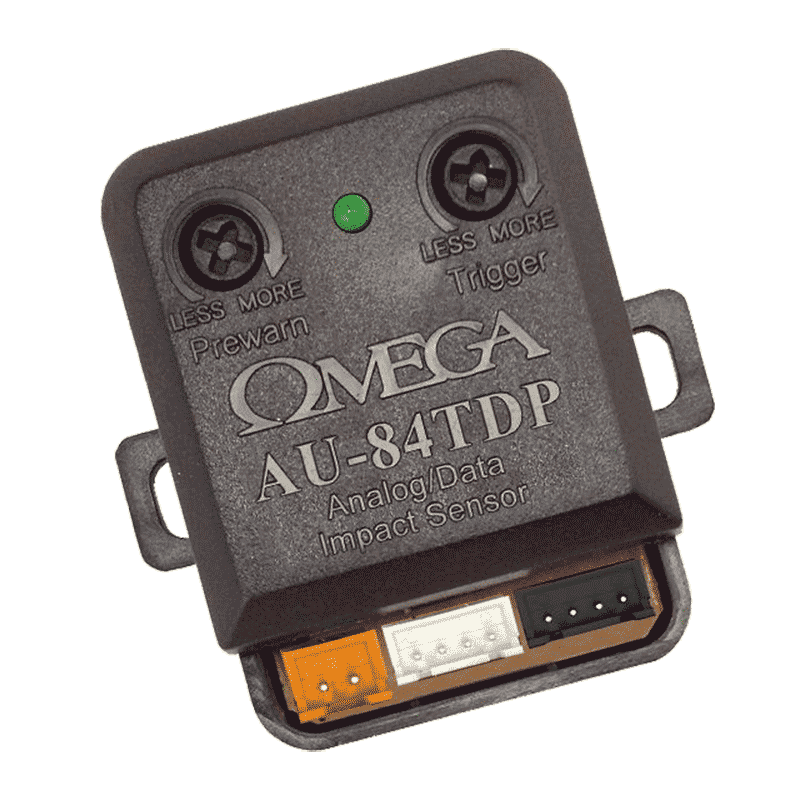
Vehicle SecurityEvery car alarm includes some form of shock sensor to detect abrupt impacts to the vehicle. There are many different designs for shock sensors. Some shock sensors work by suspending a small metal bead beside an inductor on a spring or rubber strap. Both allow the bead to move independently of the sensor housing. When the bead moves due to a shock or vibration, it induces a current in the inductor. The included circuitry determines the amplitude of the motion and decides if it should trigger the alarm.

Another method of monitoring shock and vibration is a digital accelerometer. The accelerometer communicates with the microcomputer in the shock sensor to provide information about vehicle movement. A benefit of this type of sensor is that it is almost impervious to changes in temperature. Most automotive-grade accelerometers function reliably from -40 to over 220 degrees with no noticeable change in accuracy.

Most security systems provide two levels of notification based on the signal from the shock sensor. A gentle tap on the vehicle will produce a warning that the vehicle is protected by a security system. This warning is usually in the form of a sequence of short chirps from the siren. The intent is for thieves to move on to a vehicle without extra protection. Of course, a sharp impact will trigger the alarm right away.

Optional Security Sensors

Many sensors are available to enhance the performance and coverage capabilities of a car alarm. Tilt-and-motion sensors can detect subtle changes in the angle of the vehicle to trigger the alarm. These are a great option if you want to protect a nice set of wheels or are worried about someone jacking up the vehicle to steal your catalytic converter.
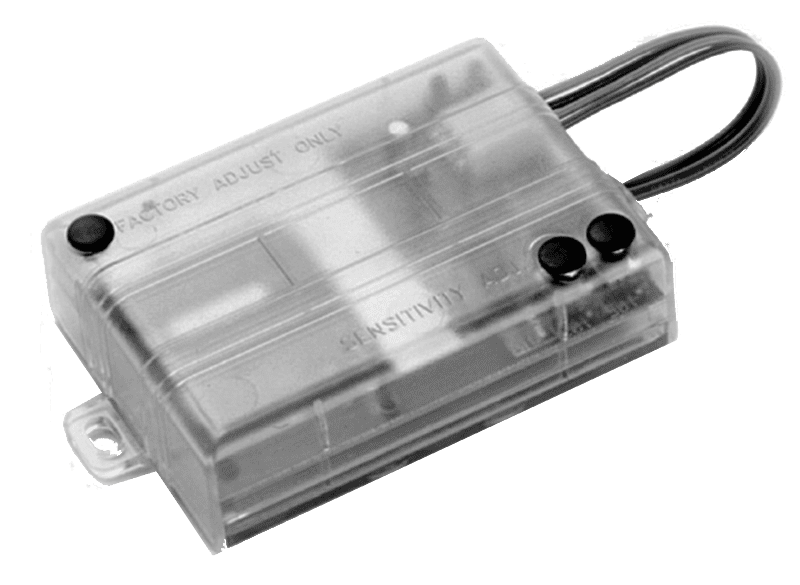
Vehicle SecurityGlass-breakage sensors include a microphone and signal processing that is tuned to listen for the sound of a hard object hitting the glass. A firm tap with a key or coin is often enough to trigger these sensors.

Radar or field disturbance sensors are another popular option. These devices set up a radio-frequency field around the sensor. When an object moves into or out of the field, the alarm will trigger. These sensors are ideal for convertible vehicles and Jeeps where the interior is accessible without setting off a shock or motion sensor. The size of the field is adjustable, so your installer can work with you to decide the appropriate amount of coverage. Keep in mind that false alarms are very annoying.

Convenience Features

The most-popular convenience feature is door lock control. This feature is standard on almost all alarm systems. When you arm the alarm, the doors lock. Not surprisingly, the doors unlock when you disarm the alarm. Remote trunk release is another popular convenience feature. Most security systems have a dedicated trunk release output that automatically disables the shock sensor or disarms the alarm just before the trunk or hatch opens. If you don’t have a power trunk release, a solenoid can be added to most vehicles to mimic the function of the key.

Power window, sunroof and power sliding door control are also options. A great example of power window control would be to roll the windows up as soon as the system is armed. If you have a van with a power tailgate or a car with a motorized trunk, controlling it remotely is also a possibility.

The Importance of Proper Installation
Vehicle Security
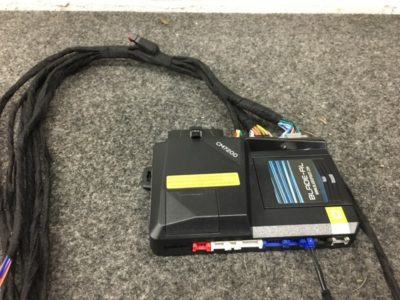
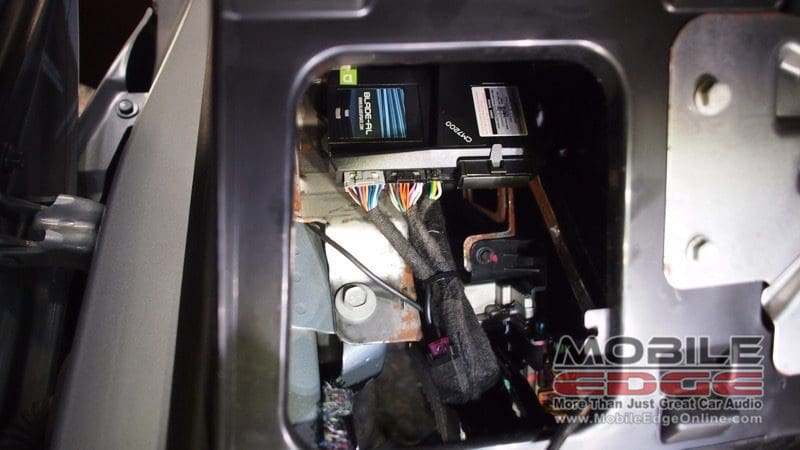
Mobile Edge shows us what a securely hidden, expertly wired alarm brain looks like.

Just as with the installation of a remote starter, how a car alarm is integrated into your vehicle can have a dramatic effect on its performance and reliability.

Many new vehicles use computerized data networks to control and monitor functions. Door lock control, door and hood status (open or closed), factory alarm system control, and even horn activation are all done digitally through a vehicle integration module. These modules need to be configured by your installer for the specific make, model, year and trim level of your vehicle before installation.

Any electrical connections required to install your alarm have to be planned and executed carefully. An installer who would simply cut the starter wire under the dash and install a starter-cut relay has effectively labeled one of the connections a thief would need to hotwire a car. Hot-wiring a vehicle is nearly impossible on modern vehicles because most keys include a factory-installed security or immobilizer system. With that said, the placement of modules, sensors and relays shouldn’t attract attention to themselves. If they aren’t concealed properly, a thief has a much easier time bypassing your security system.

All wiring should be neat and tidy. All connections should be both mechanically secure and electrically conductive. Using harness wrapping materials like cloth tape, vinyl tape or split loom tubing that matches the factory wiring is a great way for your installer to conceal the security system.

Factory Security Systems

If you are looking at a new-car brochure, you will see that the wording chosen to describe the factory “alarm” has been picked very judiciously. Let’s look at a few examples. The Ford Focus includes a “Passive Anti-Theft Engine Immobilizer System,” the Honda Civic has an “Immobilizer Theft Deterrent System” and, finally, the Toyota Camry has an “Anti-theft System with Alarm.” The Camry brochure goes on to describe how the system works: “When you insert your key into the ignition switch or bring a Smart Key fob into the vehicle, the key transmits an electronic code to the vehicle. The engine will only start if the code in the transponder chip inside the key/fob matches the code in the vehicle’s immobilizer.”

Sounds pretty good, doesn’t it? Sadly, it isn’t hard to duplicate the code from those transponder chips. After all, if you lose your key or fob, there has to be a way to replace it. The hardware to clone a key can be acquired for around $100. You will also note that there is no mention of damage prevention or protection. Very few, if any, factory security systems include a shock sensor.

If your aftermarket security system includes a starter disable system, even with the factory key or fob, the vehicle will not start without disarming the alarm.

Preventing Vehicle Theft
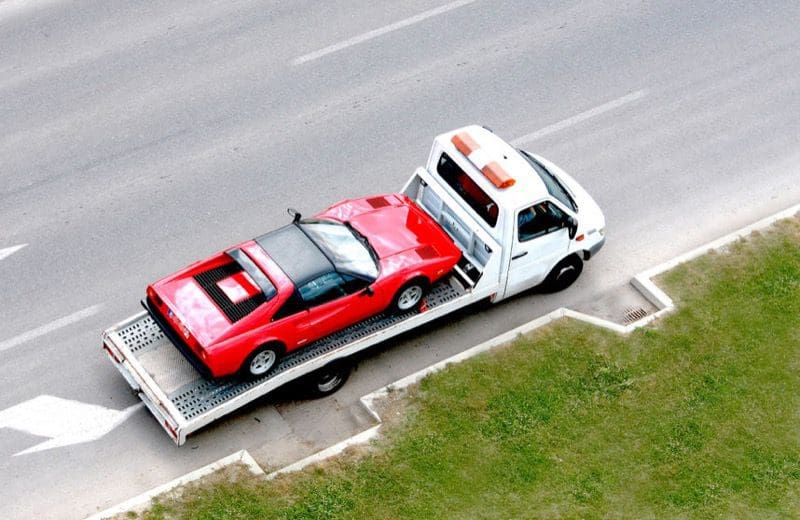
Vehicle SecurityThe cold, hard fact is that anyone with a flatbed can pull up in front of your vehicle, throw a hook around the frame and drag it onto the flatbed. In a minute, even with an alarm sounding, your car could be gone. An important aspect of ensuring your vehicle is safe is communication. If you know someone is tampering with your vehicle, you can look out the window to see what’s going on and call the police, if necessary. (Please don’t run out the door yelling and screaming – you don’t know if they have any weapons.)

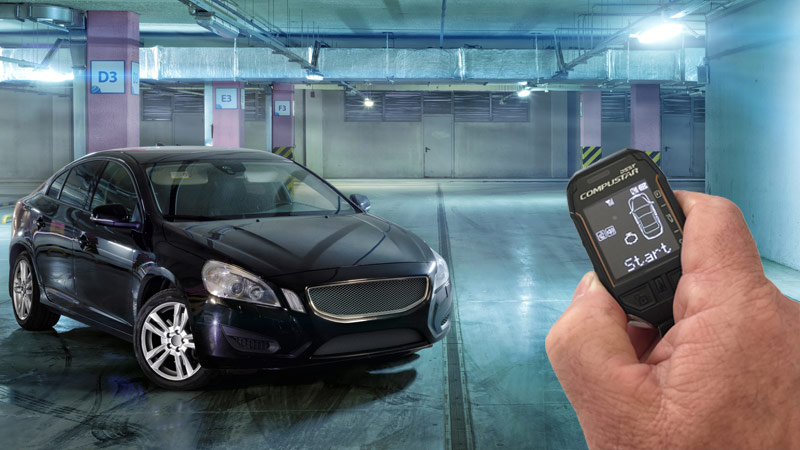
Remote key fobs that can receive signals from the vehicle are a great option. When your alarm triggers, your key fob will vibrate and buzz to let you know something is going on.

The next level of communication is a two-way cellular communication device. If your alarm triggers, your smartphone will notify you almost instantly. With cellular communication, there are no limits to the distance between you and your vehicle – you will always get alerts when something happens. These telematics systems also include the ability to lock and unlock the vehicle from the application on your phone.

Protect Your Vehicle

We could go on for days talking about the intricacies and details of automotive security systems. If you are concerned about vandalism or theft, visit your local mobile enhancement retailer to talk about adding an alarm system to your vehicle. They can suggest a solution that provides the coverage and features you want to keep your pride and joy safe and secure.

This article is written and produced by the team at www.BestCarAudio.com. Reproduction or use of any kind is prohibited without the express written permission of 1sixty8 media.

Filed Under: ARTICLES, Driver Safety, RESOURCE LIBRARY

Safer Nighttime Driving Tips

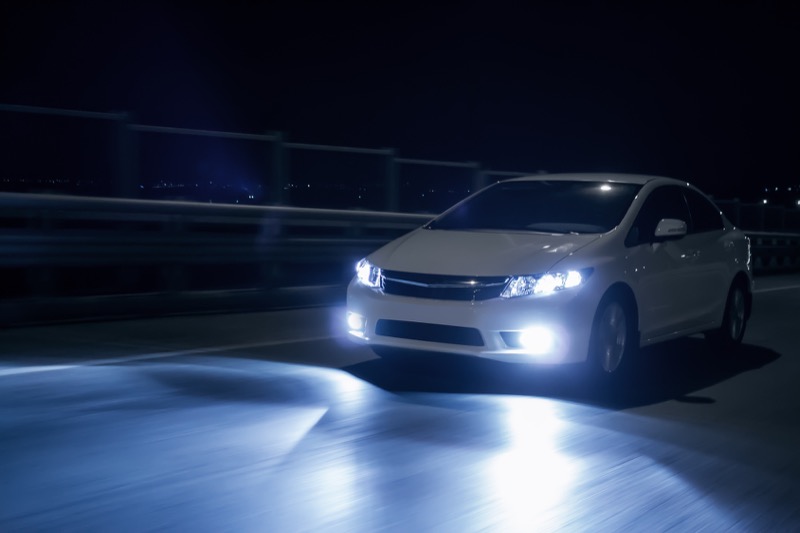
Night DrivingYour lighting system remains the most important safety component of your vehicle once the sun sets. If you can’t see objects around you, or far enough ahead of you, the chances of having a serious accident are significant and the outcome could be deadly. Ensuring proper night vision is the most important aspect of driving after sunset. Follow along as we learn about lighting and explore some nighttime driving tips.

Headlight Components and Modifications

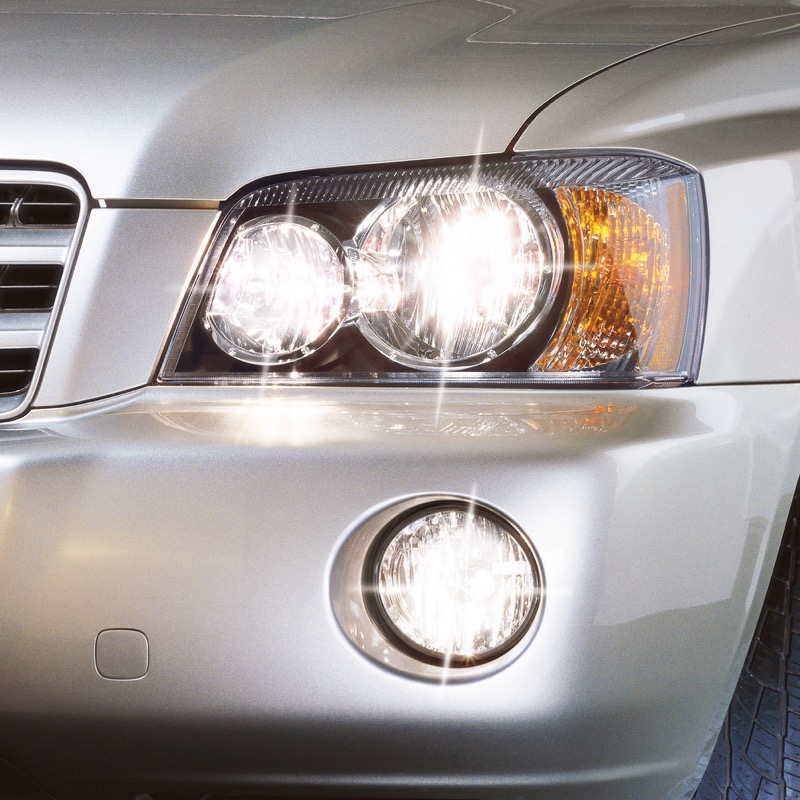
Nighttime Driving TipsThere are many options for improving how far you can see at night. Upgraded headlight bulbs and new headlight assemblies are the most popular. If you are fanatical about your lighting, you may want to look into a headlight retrofit. The retrofit process involves taking the headlight assembly apart and installing new projectors, and often new HID bulbs and ballasts.

When it comes to light assembly upgrades, too many times, people choose something that looks good or adds a little style to their vehicle. Halo rings and LED strips look cool, but don’t forget to focus on sheer performance. A proper beam pattern and efficient light production are what keep you safe.

Auxiliary Lighting Upgrades

Nighttime Driving TipsChoosing a set of auxiliary lights is a great way to increase the distance you can see. Many companies offer high-quality LED lights that your mobile enhancement retailer can integrate into your vehicle.

Be careful, though – not all lighting is legal to use on public roads. Those cool 54-inch curved LED light bars are amazing when you decide to head out on the trails after dark, but they may not be legal for use around town. Check the laws in your area before you purchase. If you want to be sure your upgrade is legal, look for DOT or SAE approval on the light assembly. When installed properly, these lighting systems won’t blind oncoming drivers.

Eight Tips to Improve Night Vision while Driving

Let’s face it: The only time we need our lighting system is after the sun sets. Upgrading bulbs, lenses and light assemblies go a long way to ensuring we are safe. There are several other things you can do to ensure you can see as far as possible. Here are eight things you can do to improve your night vision. Most of them are completely free!

1 – Make sure your lights are perfectly aimed

If you get flashed by oncoming drivers, see the leaves in the trees above your car or can’t see very far, the first step is to ensure your lights are aimed properly. Seek out the expertise of a local mobile enhancement retailer that specializes in lighting upgrades for help with the alignment process.

2 – Turn down the dash lights

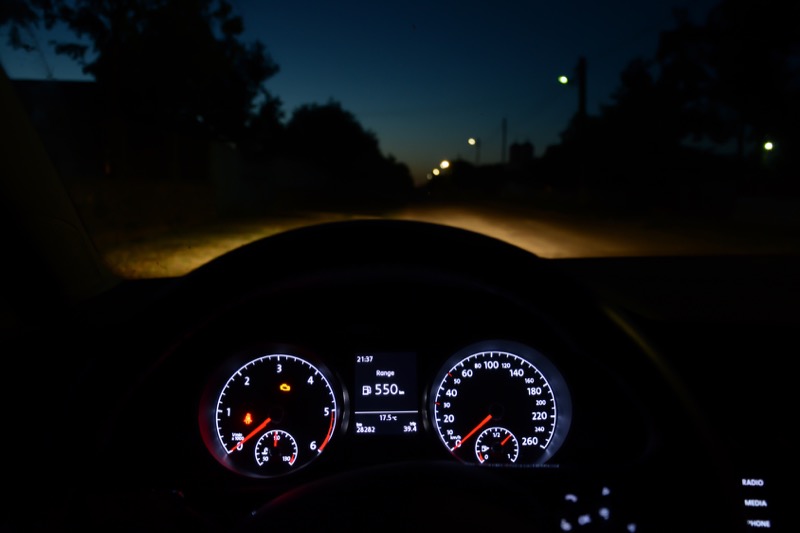
Nighttime Driving TipsWhen the lights on your dash are bright, the irises of your eyes will contract to reduce the amount of light that enters them. While this works great for balancing the brightness of lighting in the vehicle, it can work against your ability to see for long distances. If you keep the interior dark, you can see farther.

3 – Turn off your fog lights

Your fog lights cause a situation similar to overly bright dash lighting. If the area directly in front of your vehicle is bright, your eyes will adjust to that light level and reduce how far you can see. A properly designed lighting system should provide balanced foreground and long-distance light.

4 – Keep those lenses in good shape

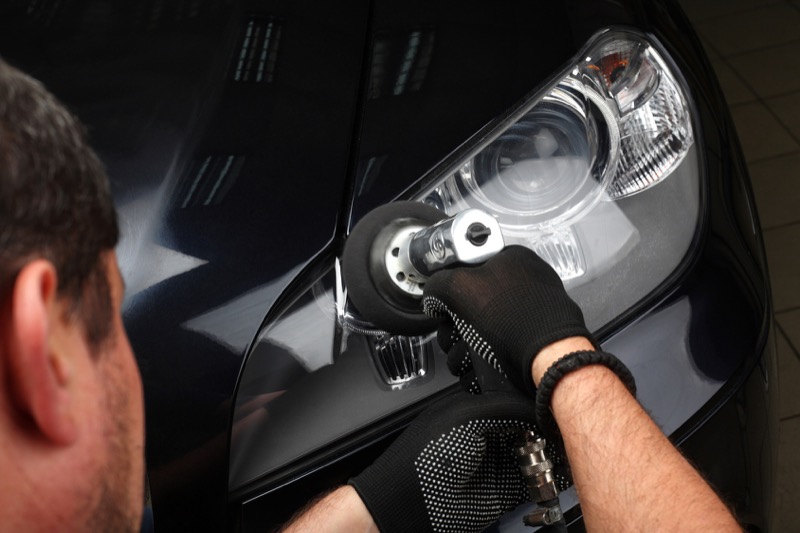
Nighttime Driving TipsIf the plastic lenses on your headlights are yellowing or chalky, they will reduce the amount of light that gets from the bulb to the road. Many high-quality lens restoration kits are available that can restore lens clarity and improve visibility.

5 – Keep your windshield clean

It only makes sense that being able to see out of your vehicle is going to improve your ability to drive safely at night. Use a high-quality glass cleaner and a lint-free cloth or microfiber towel to keep the interior of the windshield clean. A great trick for getting rid of stubborn, oily film that builds up over time is to use newspaper and your favorite window cleaner to wipe the windows. The newspaper won’t leave any lint.

Keep the outside of your windshield clean as well. If a cloth or cleaner won’t remove everything, you can escalate to a clay bar or even 0000 steel wool. Just keep the steel wool away from the trim.

6 – Be careful where you look

Nighttime Driving TipsWhen a car is coming toward you, try not to look into the light. In the same way that bright dash lights cause your irises to close, so too will oncoming headlights. Some advanced driver training courses even suggest closing one eye. We suggest trying to focus ahead of your vehicle.

7 – Be prepared for rain

Few things are worse than trying to drive at night while it’s raining. Ensure your wiper blades are in excellent condition and aren’t leaving streaks. If they are, you can try cleaning the edges with a little isopropyl alcohol and a soft cloth. The next step is to simply replace your wiper blades – they don’t last forever.

Treating your windshield with a high-quality hydrophobic window treatment like Aquapel, Opti-Glass or Rain-X will help water bead up and roll off your windows without your having to use your wiper blades at all.

8 – Take care of your eyes

Nighttime Driving TipsEat your carrots! OK, well, eat whatever you want, but don’t look at the sun or a solar eclipse. Make sure you wear high-quality sunglasses to prevent macular degeneration from UV exposure. Wear “computer glasses” if you are going to be staring at a monitor all day. If you are working with power tools or in risky situations, wear safety glasses or goggles. Most importantly, visit an optometrist regularly to stay on top of your eye health.

Drive Safely

Combining the above tips with a properly aimed, high-quality lighting system can dramatically increase your safety, and the safety of those around you. If you are interested in upgrading your lighting system or adding more lights, drop by your local mobile enhancement retailer and talk to them about your needs.

This article is written and produced by the team at www.BestCarAudio.com. Reproduction or use of any kind is prohibited without the express written permission of 1sixty8 media.
Filed Under: ARTICLES, Lighting, RESOURCE LIBRARY

A Quick Look at Apple and Android Smartphones

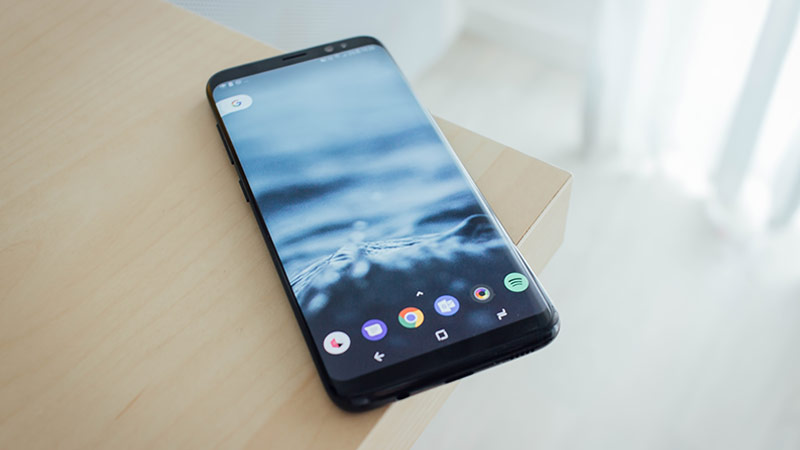
Apple and Android SmartphonesLooking back to the Palm Pilot and the original Blackberry, we have been on a constant path toward having full-blown computers with us at all times. Fast-forward a few decades and it’s rare that folks don’t have a smartphone in their pocket or purse. Apple and Android smartphones have changed the way we communicate and are entertained.

In the mobile electronics industry, we have been working hard to find ways to integrate your smartphone into your vehicle to help you safely communicate and listen to your music. Dive into any discussion about smartphones on Facebook, and you’ll quickly see it turn into a battle of which kind is better. As each device changes, seemingly by the hour, answering that question is nearly impossible. With that said, there are definitely benefits and drawbacks to each. Let’s look at some cold, hard facts about the Android and iOS operating systems and their associated hardware.

A Brief History of the iPhone

Launched in the summer of 2007 by Steve Jobs, the iPhone was touted as a game-changer in communication technology. Apple retains a unique advantage over Android-based smartphones in that it controls not only the hardware chosen for the device but the software as well. The iOS operating system is designed and tested to work together with the iPhone.

iPhone Complaints

Apple and Android SmartphonesWhat company doesn’t have haters? People either love the iPhone for iOS for its interface, associated software and approved hardware accessory devices or hate it for its monopolistic approach. Few people like having to use iTunes to load their music and the cost of MFI (Made for iPhone/iPod) approved cables and devices definitely raises their cost.

Is there a benefit? Definitely. When you buy an approved accessory, you know it will work. When you transfer music, you know it will play. You may lose some of the independence of doing what you want when you want, how you want, but the infrastructure exists to make owning and using an iPhone as trouble-free as possible.

Apple is often criticized by Android users for being late to the party with new features: “Oh, you added facial recognition to the iPhone X and wireless charging to the iPhone 8! That’s great, Android phones had that last year.” Maybe it takes longer for Apple to test these technologies. Maybe the development and testing time for each new phone takes a lot longer. We may never know, but it sure is nice when the features arrive and work flawlessly.

iPhone in the Car

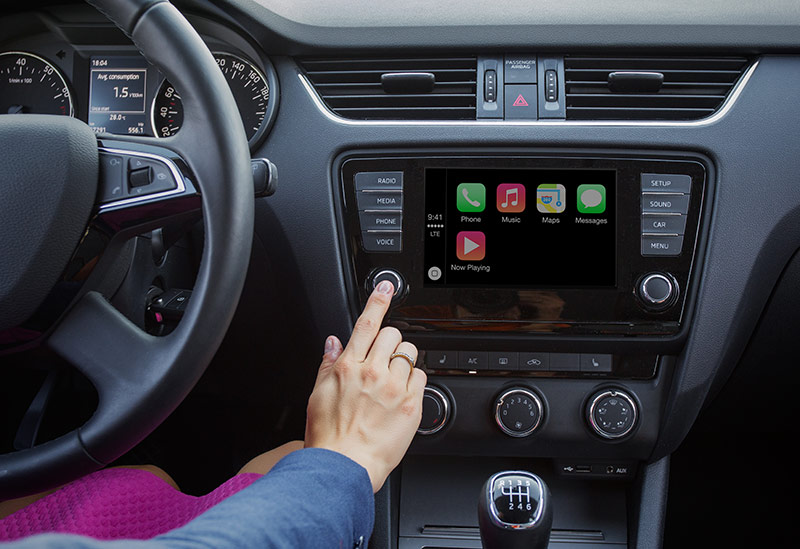
Apple and Android SmartphonesApple led the automotive smartphone connectivity battle with CarPlay. CarPlay was launched at the Geneva Motor Show in 2014 with Ferrari, Mercedes-Benz and Volvo as its first automotive partners. CarPlay offers an interface that mimics the icon layout on the phone to make using the system intuitive.

CarPlay allows users to use the Siri voice recognition engine to perform tasks like listening to text messages, making phone calls, selecting music and choosing navigation destinations. You don’t have to look at the screen at all to initiate any of those tasks.

With Apple under control of the CarPlay software, both OEM and aftermarket infotainment system manufacturers need to send samples to Apple for testing and approval before they can be sold. Apple works at its own pace, and we know this can cause delays. Are they worth it? If the system works the way it should, then most definitely.

Android-Based Smartphones

Apple and Android SmartphonesDeveloped by Google, the Android mobile operating system started development in 2005 and was launched in 2007. At the same time, the Open Handset Alliance – a consortium of hardware, software and telecommunication companies – was launched to advance open standards for mobile devices. The goal of the Open Handset Alliance was to create an open competitor to Symbian, Blackberry OS and iOS-powered devices. The first Android-based device was the T-Mobile G1, developed by HTC and launched in September 2008.

A fun fact about Android is its naming convention for each major release. While this practice is not uncommon, the names are rarely shared with the public. In order, the code names have been Cupcake, Donut, Eclair, Froyo, Gingerbread, Honeycomb, Ice Cream Sandwich, Jelly Bean, KitKat, Lollipop, Marshmallow, Nougat and, most recently, Oreo. Clearly, the Android development team has a snacking issue.

Is Free Good?

Apple and Android SmartphonesAs we stated, the Android mobile operating system is released by Google under an open source license. This means that phone manufacturers don’t need to buy or license the operating system. This can reduce development costs and accelerate the focus on new technology.

As with most things, for every silver lining, there is a dark storm cloud nearby. With phone manufacturers like Samsung, Huawei, LG, Sony and HTC each creating their own hardware and implementation of the Android operating system, updates for each device are at the mercy of the manufacturer and the wireless carriers. With Android about to roll out Version 8.1.0, not every device will get an upgrade.

In May 2017, coinciding with the launch of Android 8.0, Google announced Project Treble with a goal to streamline and simplify the update process for Android-powered devices. Only time will tell how successful they are.

Is Easy Good?

If you want to put a few songs on your Android phone, connect the USB cable to your computer, and drag the files to the Music folder. You can manage the files on your computer however you want, or not at all – if that’s your cup of tea. Similar folders exist for Pictures, Podcasts, Ringtones and Movies. You can treat them the same way you would a USB memory stick.

When Apple announced the iPod would move from Firewire to USB, radio manufacturers were quick to adopt interfaces that would allow control playback of the songs on the device in the car. This adoption took a lot longer for Android, and even up until last year, some source units could not play music stored on an Android phone by simply connecting the USB cable.

Bluetooth Problems

Apple and Android SmartphonesWith Apple and Android smartphones, Bluetooth connectivity is a big issue. Almost everyone has a Bluetooth hands-free solution in their car, so being able to use your phone with it is crucial to your productivity. Apple hasn’t been flawless in terms of backward compatibility to older source units, but for the most part, they seem to work well. Android, on the other hand, has been plagued with connectivity issues that vary by the phone manufacturer. Several aftermarket radio manufacturers cringe when dealers or consumers call about Bluetooth issues from specific brands.

Imagine if you update your smartphone and you can no longer connect to your vehicle’s hands-free system. With Apple, you can complain at the Apple Store or log into their support website. Though they won’t admit it outright, they pay attention to these issues and in many cases, fixes are released in updates.

If you own an Android-based phone, whom do you call when something doesn’t work? The store you bought the phone from? Your carrier? The manufacturer? Google? Simultaneously, each of them and none of them are singly responsible for the issue, nor can any one of them directly help you find a solution. Sure, there are exceptions, but with the open source philosophy of Android, connectivity with third-party devices is a lot more variable.

Android in the Car

Apple and Android Smartphones Android Auto was announced in 2014 as a joint effort between 28 automobile manufacturers. The actual Android Auto app was released on March 19, 2015; in May 2015, the Hyundai Sonata became the first vehicle to offer Android Auto support. Android Auto offers similar functionality to CarPlay, but eschews the menu-driven foundation and provides information about the function you are using on the screen. Voice commands and features work similarly to CarPlay.

Android Auto has an advantage over CarPlay with Google Maps and Waze. Both of these navigation solutions are considered superior to Apple Maps. You will find that many Apple users, unless they are using CarPlay, use the iOS versions of Waze and Google maps for their navigation needs.

Which Phone is Better?

Apple and Android SmartphonesOur goal isn’t to determine a winner in the battle of Apple and Android smartphones – that’s up to each individual user. If you use Macintosh-based computers at home, you may see no better option than to choose an iPhone. If you like the freedom of Android open architecture, there’s absolutely nothing wrong with that.

Integration for Apple and Android Smartphones

No matter which phone technology you use, your local mobile enhancement retailer can help you integrate your phone into your vehicle. CarPlay, Android Auto, wireless charging, audio streaming, hands-free calling solutions or even a custom mounting bracket are available for most vehicles. Drop by and see how they can make using your smartphone in your car safer and easier.

Steve Jobs photo by Ben Stanfield (https://www.flickr.com/photos/acaben/541326656/) [CC BY-SA 2.0 (https://creativecommons.org/licenses/by-sa/2.0)], via Wikimedia Commons

This article is written and produced by the team at www.BestCarAudio.com. Reproduction or use of any kind is prohibited without the express written permission of 1sixty8 media.
Filed Under: ARTICLES, Driver Safety, RESOURCE LIBRARY

How to Buy a Remote Start System For Your Vehicle

Remote Start SystemMobile electronics require a much different purchasing process than something you are buying for home use. A piece of furniture, a new toaster or a new lawnmower may require similar levels of research before making the purchase, but once you have them, you can take them home, unpack them, and start using them right away. Mobile electronic products like a new radio, an amplifier or a remote start system are more akin to buying a new electrical panel for your home or pump for your pool or hot tub. None of these products will do anything unless they are installed properly. Importantly, if these products are not installed properly, significant and serious problems could arise.

One of the more complex purchases you can make in terms of an automotive accessory is a remote car starter. These fantastic products will let you start your car by pressing a button on a remote. Your car can idle safely and securely in your driveway or parking lot so that it will be more comfortable when you get to it. In the summer, a few minutes running your air conditioning can cool the interior of your vehicle significantly. In the winter, letting the engine build up heat and the rear defroster start melting ice, frost or snow can make heading to work much more pleasant.

What Comes With a Remote Start System?

If you walk into your local mobile electronics retailer and look inside a remote starter box, you will see a black plastic case with as many as 20 different wire connectors and perhaps 100 individual electrical connections. There are usually three to six wire harnesses in the box, as well as a pair of remote controls, an antenna and the antenna data cable. If the system includes security features, then there will be a siren and a shock or motion sensor of some kind.

What’s with all the Wires?

Remote Start SystemYou might wonder why there are so many harnesses and wires on the remote starter. Most remote starter systems are designed as universal platforms. They need inputs and outputs in order to work with thousands of different vehicles. Power, ground, ignition, start, door lock, door unlock, door trigger, key sense, and brake input are some of the simple-to-understand connections. There are dozens more. The system also needs to be able to communicate with vehicle interface modules, telematics devices and system programming devices during the installation process. Safety switches, LED’s, antennae, temperature probes and security sensors often have their own dedicated connectors.

What You Need to Know to Buy a Remote Starter System

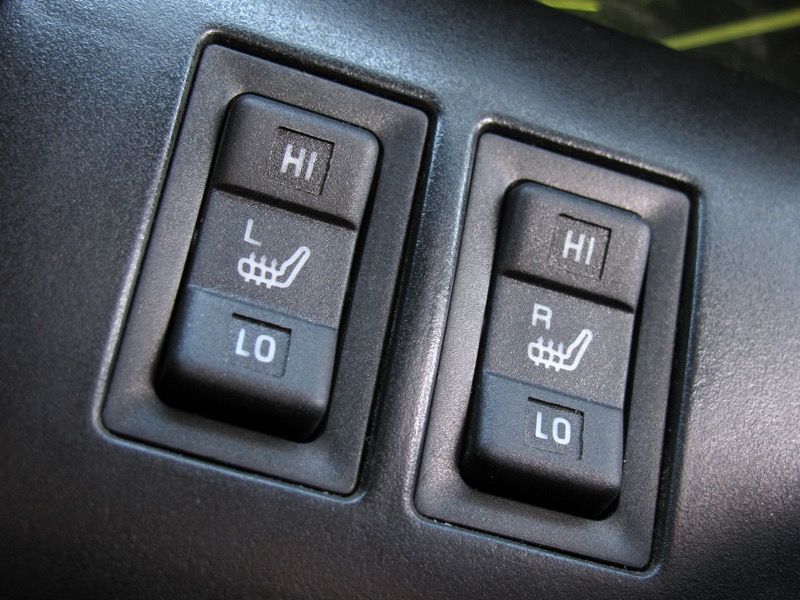
Remote Start SystemAs the consumer, you should prepare yourself with some information for the retailer before you go shopping. You don’t need to know what make or model of remote starter you want to purchase, but you do need a clear understanding of how you will use the system. You’ll need to know how much remote range is required based on where you park your car at home or work. Will you want 1-Way or 2-Way remotes? If you opt for a 2-Way remote, are you OK with LED indicators, or do you want an LCD display? Are you interested in adding security (car alarm) functions to the remote starter? If you have a minivan with power sliding doors, do you want the remote starter to be able to open and close them? Many remote starters can automatically activate heated seats, heated steering wheels and the rear window defroster if the temperature inside the vehicle is below a preset level. Are those features you may want?

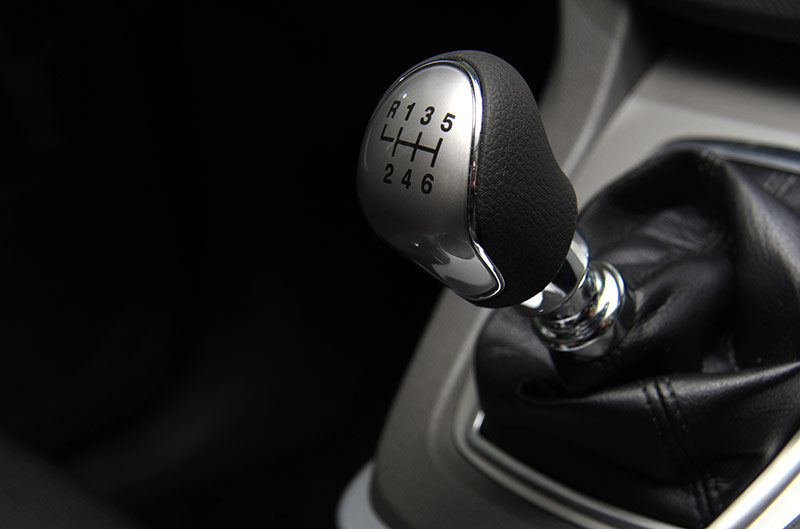
At the same time, you are describing what you want your new remote starter to do, the salesperson will be honing in on the best system they have to give you those functions while working with your vehicle. He or she will need to know if your vehicle has a manual or automatic transmission. Does your vehicle have keyless entry? Does it have apush-to-start ignition system? You need to know the exact year, make, model and trim level of the vehicle in order to complete the quotation process. Different applications can often require significantly different interface hardware.

What Does a Remote Starter Cost?

Remote Start SystemAs you can see, creating an accurate quote requires significant research on the part of the retailer. Without the proper information, asking “what does a remote starter cost?” is like asking how much a new house or car costs. There are simply too many options and variables to provide an all-encompassing answer.

The answer to the question of what a remote starter costs is based on the features and performance you want from the system. If you have a common vehicle and don’t need much range, you can get a quality remote starter for $300 or $400. If you want as much range as possible, want the heated seats and rear defroster to activate automatically, have a manual transmission, choose an LCD remote and want security features like a siren and shock sensor, the bill could be well over $1000.

Remote Starter System Quality

As with any product, there are good quality products and inexpensive products. We can’t tell you which to buy and which to avoid, but a general rule of thumb is to stick to the brands you have heard of. Premium products often provide better vehicle compatibility and more reliability in terms of their remotes. Some brands include remotes that are water resistant or even waterproof. Better quality systems often carry longer warranties.

How consumers perceive the performance of a remote starter is not in whether or not the vehicle starts, but often how quickly the system responds to commands from the remote and how easy it is to use. Premium products offer a better overall user experience.

Questions for the Retailer

Remote Start SystemAfter you and the salesperson are homing in on the perfect remote starter solution for your vehicle and your requirements, it is time to turn the interview process around and ask a few questions. Ask about the warranty on the remote starter. Most carry a long warranty on the control module and between one and three years on the remotes and accessories. Ask if you need to register with the manufacturer in order for the warranty to be valid. Some brands require this step. Ask about their warranty on the installation. Many premiere shops back their labor with a lifetime guarantee for as long as you own your vehicle.

Are they Worthy?

Remote Start SystemHere is where your gut instinct kicks in. Ask them about how they install the remote starter into your vehicle. There is no right answer here, but there are certainly wrong answers. A few key words to listen for are “soldering” or specific connection types such as a “Western Union”. If they mention “3M” or “tesa tape”, those are very good signs. We can’t really say that one method or term is better than another, but you will get a sense of their attention to detail in how they integrate the starter with your vehicle.

Many shops start every installation with a vehicle pre-inspection, just like when you rent a car. This process will identify any abnormalities in the physical condition of the vehicle or issues with the electrical system. For example, if the vehicle Check Engine light is on, that should be addressed before the remote starter installation begins. Some shops will use heavy-duty seat covers, floor mats and even steering wheel covers to protect the interior while they are working on it.

Have a look at the shop itself. Does it seem organized? Is the store relatively tidy? Ultimately, If you aren’t getting a warm and fuzzy feeling, ask more questions. If you aren’t comfortable, keep shopping.

Why Installation Matters

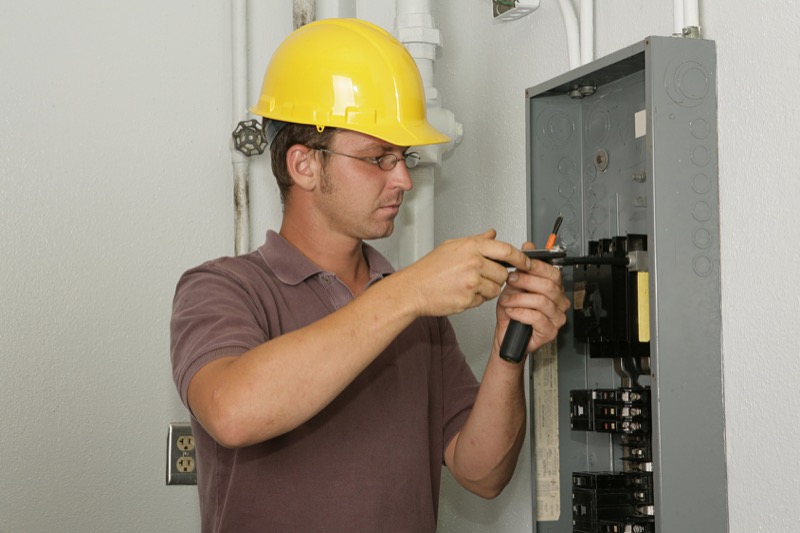
Remote Start SystemLet’s go back to our analogy of buying a new electrical panel for your home. Perhaps you want to add a few circuits to your workshop or the garage and the original panel has run out of room. Maybe you have a home with screw-in fuses and you want to upgrade to circuit breakers with an integrated GFCI for the kitchen and bathrooms? You should seek out a licensed electrician to perform the retrofit. He will know the local building code guidelines and understand how to route and secure the wiring safely to ensure maximum performance and reliability.

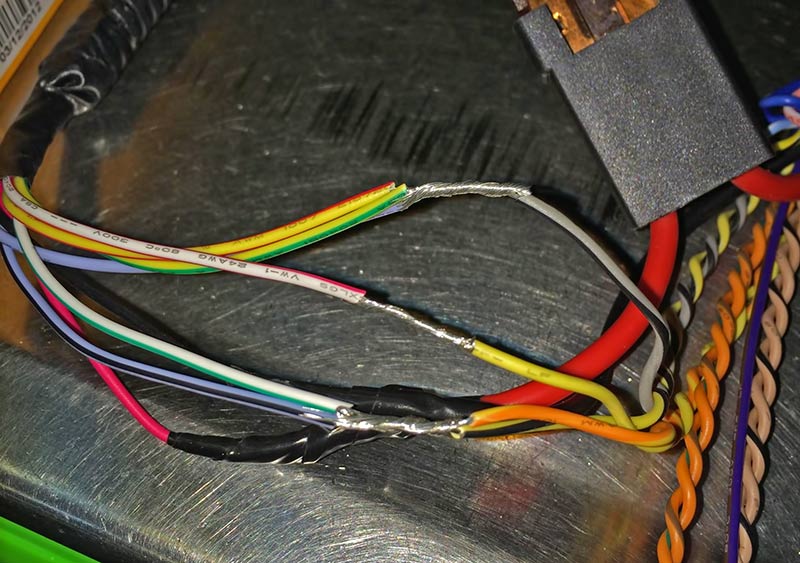
A single loose electrical connection, be it in the home or in your vehicle can be very dangerous. Poor connections can heat up or act intermittently. When working on the electrical system of your vehicle, every connection is equally important and should be treated as such. A quality electrical connection must be electrically conductive, mechanically secure and properly protected.

If you decided to look in a remote starter box, you will find instructions for the starter. This guide explains the function of each wire and connector on the starter brain. It does not explain which wires need to be used in your specific vehicle. Installing a remote car starter requires the technician to understand which wires need to be used to communicate with your vehicle in order to make it start. It takes years of experience and constant education to be a good remote start installer.

Who you choose to integrate the remote starter system you want into your vehicle is more important than any of the features on the remote starter itself. A mediocre quality remote starter that is installed properly can outperform a premium starter that has a questionable installation. We recommend looking for the best possible starter and installation for long-term enjoyment of the system.

Add Comfort and Convenience Today

Purchasing a remote starter for yourself, for a friend or a family member is a great idea for birthdays and holidays. When it is the middle of the summer, coming out of work after a long day to a car that is already cooling off can be refreshing. Likewise, heading out the door on a cold winter morning to toasty warm seats and windows that are easy to brush off can not only save you time but significantly reduce your stress level. Visit your local mobile enhancement retailer and ask about the remote start options available for your car, truck or SUV. You’ll be glad you did.

This article is written and produced by the team at www.BestCarAudio.com. Reproduction or use of any kind is prohibited without the express written permission of 1sixty8 media.
Filed Under: ARTICLES, Remote Car Starters, RESOURCE LIBRARY

Product Spotlight: KICKER MSC65

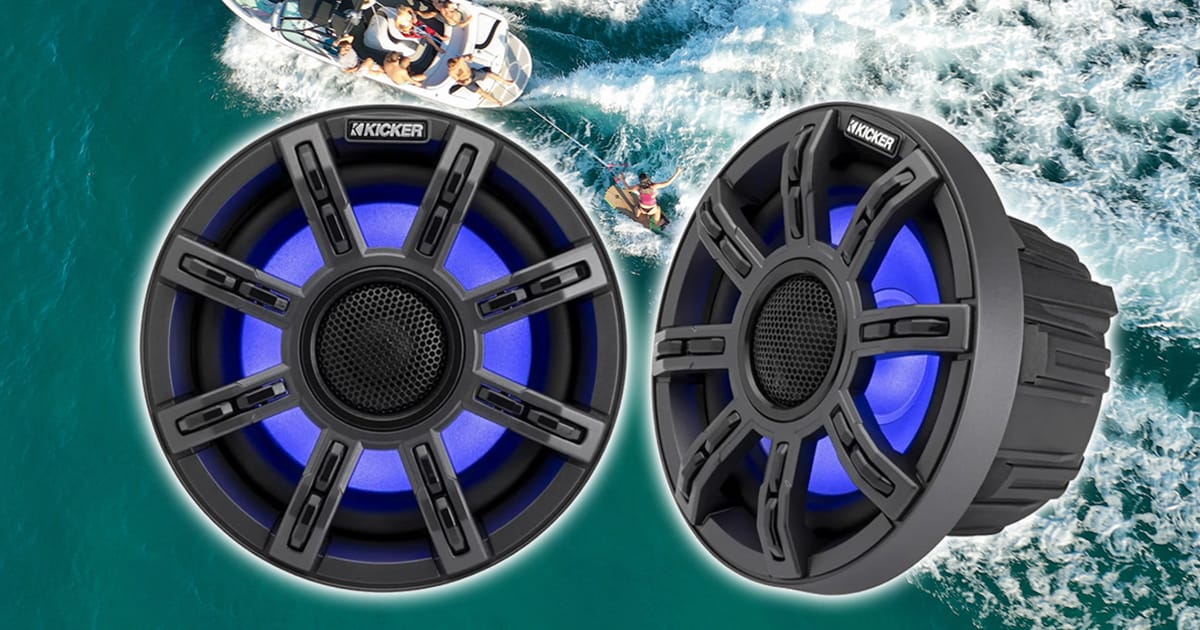
KICKER MSC65

There are dozens of companies manufacturing marine-grade speakers. That certainly doesn’t mean that all the speakers sound good and have equivalent performance. KICKER, a company known for developing car audio, powersports and marine audio solutions, recently launched their M-Class Premium Series of marine products. This spotlight will look at the MSC65 6.5-inch coaxial speaker from this high-end family. Let’s check it out!

MSC65 Specifications

The KICKER MSC65 speakers have a published frequency response of 55 Hz to 25 kHz with an efficiency of 89 dB at 1W/1M. Recommended amplifier power is 15 to 100 watts, while peak power handling is 200 watts. The mounting requirements are a 5-7/16” hole with 3-9/16” of depth behind them.

Features of the KICKER MSC65

The MSC65 is a 6.5-inch coaxial that’s designed around a glass-filled nylon chassis. The chassis provides a stable platform for the magnet and moving assembly. At the heart of the speaker is a carbon-fiber-infused polypropylene woofer cone. A Santoprene synthetic rubber surround provides a compliant connection at the top edge of the cone that will last for many years.

For a tweeter, each speaker uses a textile material called Teteron to provide smooth, audiophile-grade performance. The tweeters have a diameter of 28mm (1.1 inches), so they can play low enough to prevent the woofers from becoming directional. The speakers use an integrated -12 dB/octave passive crossover at 3.2 kHz, which helps to ensure smooth and natural sound.

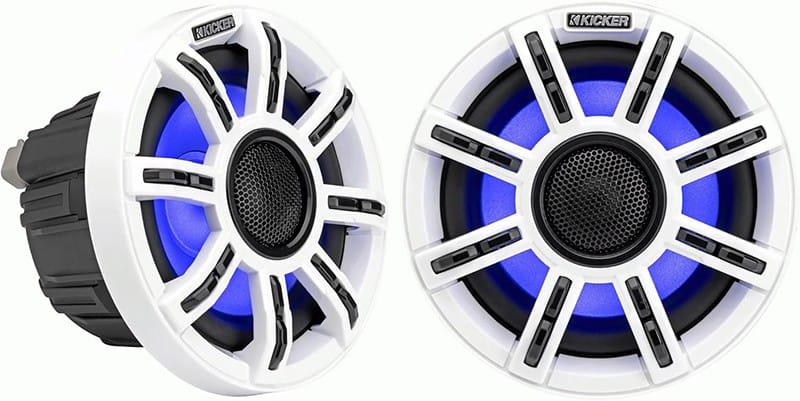
A perforated metal mesh grille protects the tweeters. An eight-spoke grille above the woofer cone supports the whole assembly. This eliminates the need for a pole piece, thereby increasing the woofer’s cone area to improve efficiency and bass production. Each pair of speakers includes both the white and charcoal grilles.

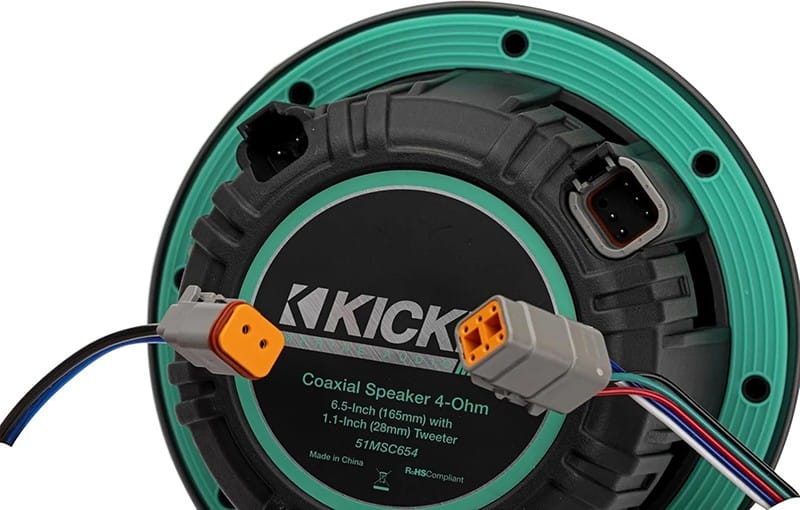
Electrical connections for the speaker are made via two-position Deutsch-style connectors to ensure a reliable, water-resistant connection. The speakers feature RGBW LED illumination, which lights up the cone from an LED strip wrapped around the tweeter’s neodymium magnet. The optional KMLC LED Lighting Remote controller can control the five-wire lighting system. Alternatively, the lighting can be hard-wired to a specific color to match your boat.

KICKER MSC65
The MSC65 set includes both charcoal and white grilles along with RGBW lighting to add a little extra style.

Real Marine™ Products

KICKER has invested significant resources into ensuring the entire series of M-CLASS products is up to the toughest challenges Mother Nature can dish out. All the speakers and subwoofers are tested for resistance to corrosion from salt under the ASTM B117 standard. They are also tested for colorfastness and resistance to chalking or fading due to prolonged UV exposure under the ASTM G154 standard. Finally, they have an IPX66 water-resistance rating thanks to integrated mounting gaskets on the backs of all the speakers. You can be confident that your purchase from KICKER will last for many years.

KICKER MSC65
Speaker wire and illumination connections are handled by weather-resistant Deutsch-style connectors that are molded into the chassis.

Other KICKER M-Class Solutions

Aside from the MSC65 6.5-inch coaxial speakers, the M-Class line includes 8-inch coax speakers along with 6.5 and 8-inch component speaker sets. The series includes 10 and 12-inch subwoofers designed for compact enclosures or infinite baffle applications. There is also a compact marine-grade subwoofer enclosure with a 10-inch subwoofer and a matching 10-inch reFLEX passive radiator to improve low-frequency efficiency.

Upgrade Your Boat with KICKER M-Class Speakers and Subwoofers Today!

If the sound system on your boat doesn’t put a smile on your face when you turn up the volume, drop by an authorized KICKER retailer today and ask them about the amazing new M-Class marine audio products like the MSC65. You can find an authorized dealer using the locator tool on their website. For more information on KICKER marine, powersports and car audio products, be sure to follow them on Facebook, Instagram, and of course, their amazing YouTube channel.

This article is written and produced by the team at www.BestCarAudio.com. Reproduction or use of any kind is prohibited without the express written permission of 1sixty8 media.

Filed Under: ARTICLES, Marine Audio, Products, RESOURCE LIBRARY Tagged With: KICKER

  • Page 1
  • Page 2
  • Go to Next Page »

Primary Sidebar

About Us

About-us

If you live in Berks Country, Pennsylvania, you have dozens of options in terms of where to go for audio system, collision avoidance, remote starter and window tint upgrades for … [Read More...]

Car Audio

V2-Sliders-Car-Audio-A1b

Whether you want the precision of a recording studio, the impact of a concert or both, car audio upgrades from Elite Car … [Read More...]

Window Tinting

Window Tint

Tinting the windows of your car or truck is a great way to add comfort and style to the vehicle. The automotive window … [Read More...]

Remote Car Starters

Remote Starter

Remote Car Starters One of the most popular product categories at Elite Car Customs is remote car starters. Imagine being able to start your vehicle with the push of a button so … [Read More...]

Footer

Location


Get Directions to Elite Car Customs

Connect with Us

  • Facebook
  • Instagram

Services

  • Car Audio
  • Remote Starters
  • Driver Safety
  • Window Tint

Hours

Monday, Tuesday, Wednesday, Thursday, Friday9:00 am – 5:00 pm

Copyright © 2026 Elite Car Customs · Privacy Policy · Website by 1sixty8 media · Log in