• Skip to main content
  • Skip to primary sidebar
  • Skip to footer

Elite Car Customs

Reading PA's expert for fun and functional upgrades for your ride!

1176 Park Rd Unit A10, Reading, PA 19605 484-671-2343
  • Home
  • Services
    • Car Audio
    • Remote Starters
    • Driver Safety
    • Window Tint
  • About Us
  • Location
  • Contact Us
  • Facebook
  • Instagram
  • Search

BestCarAudio.com

About BestCarAudio.com

BestCarAudio.com is a showcase for the very best mobile electronics retailers in the world and a place to educate and inform interested consumers about existing and emerging technologies.

Product Spotlight: KICKER KMC5

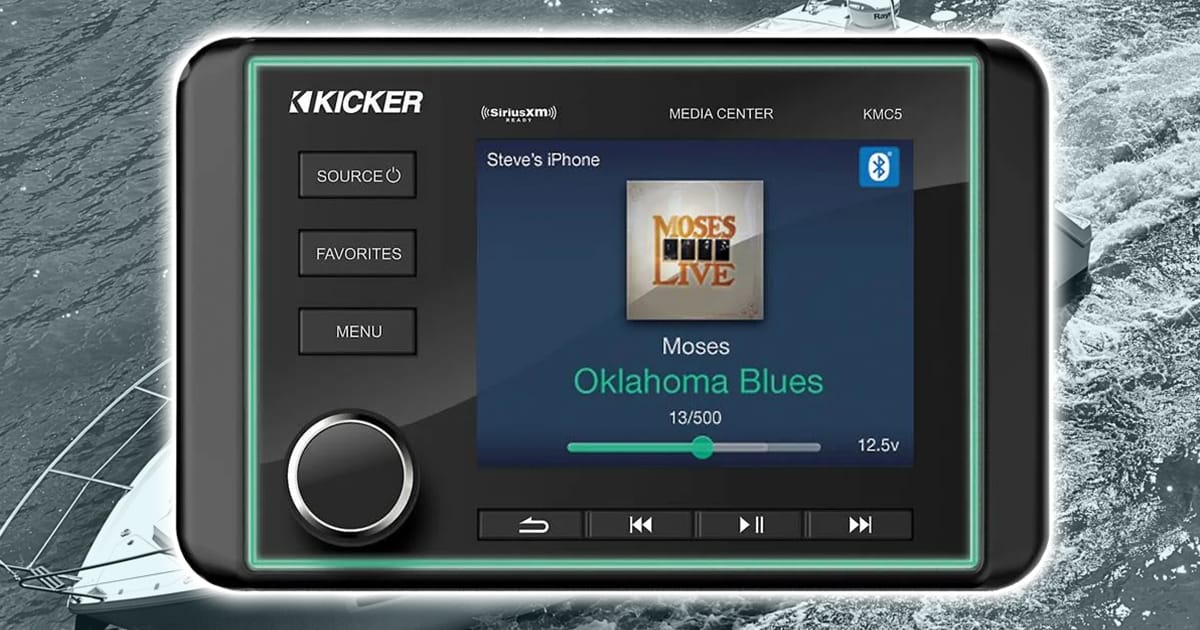
KICKER KMC5

Going back a few decades, only a handful of car audio manufacturers offered marine-specific source unit options. These were often car radios with oversized front panels with waterproofing features. Now, there are dozens of companies that offer marine source units. One that stands out for its features and performance is the KICKER KMC5, which is the subject of this product spotlight. Let’s check it out!

Features of the KICKER KMC5

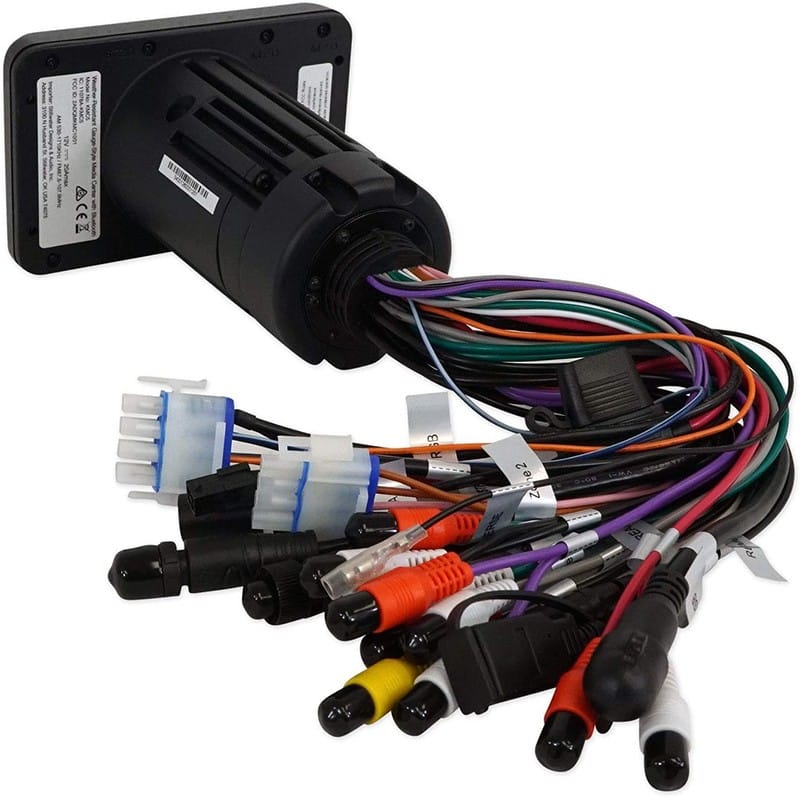
The KMC5 is a marine source unit with a face measuring 5.5 inches wide and 3.5 inches tall. The radio mounts through a three-inch hole, so it can replace a small round unit or a large gauge in an instrument cluster. If nothing else, drilling the mounting hole with a hole saw is much easier for your installer than cutting out a rectangle with an air saw. The radio needs about seven inches of clearance behind the mounting surface for the chassis and wire connections. The front panel is IP66 rated, so you don’t have to worry about rain or splashes causing issues. Of course, KICKER’s Real Marine rating means the radio is built with materials that won’t fade, chalk, crack, or corrode when exposed to the sun or saltwater.

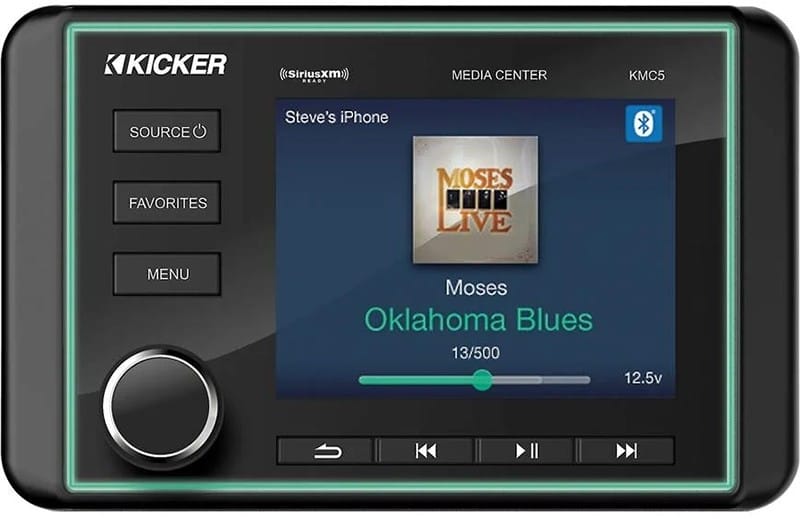
The radio features a sunlight-viewable 3.5-inch full-color LCD screen that provides a clear view of what’s playing from a USB thumb drive, SiriusXM satellite radio, or the built-in AM/FM tuner. USB support is compatible with FAT32-formatted thumb drives, and media formats include MP2, MP3, WMA, WAV16, FLAC, AAC, ALAC, and M4A. You can also stream music or a service like Pandora, iHeartRadio, Spotify, or Apple Music over the Bluetooth A2DP connection. The radio includes Bluetooth AVRCP so you can control your smartphone or media player from the source unit.

While we are on the topic of audio sources, it’s worth noting that the KMC5 includes a Weatherband tuner and an auxiliary input. You can use the input with something like a TV, DVD player or media player if you have a larger boat. Speaking of video, the KMC5 has a video input that can be used with an optional backup camera. There’s an external trigger included, so the rear camera can be activated with a switch at the helm. This would be a great option for backing a boat into a narrow slip at the marina.

If you’ve looked closely at the buttons on the face, then you might have seen the Favorite option. This is a quick-access button to whatever source, radio station or weather information channel you want.

KICKER KMC5
The front panel of the KMC5 radio features a 3.5-inch color display, making it easy to see what’s playing.

System Features and Specifications

Moving on from source options, we should discuss the outputs from the radio. The KMC5 includes six channels of amplification, each rated to deliver 25 watts into a 4-ohm load and 40 watts into a 2-ohm load. You’ll notice the power wire on the amp harness is larger than the typical 14- or 16-gauge conductor you’d find on a 22-watt x 4 radio. Your installer may need to run a dedicated 10-AWG cable for power and ground to the fuse panel at your point. Hey, if you want an amp, even one in a source unit, to produce power, you need to feed it power properly.

On the preamp side, the radio includes stereo front and rear outputs, a pair of subwoofer outputs and a 2-zone RCA output. The fifth and sixth speaker output connections are assigned to the second audio zone output. So, you could power speakers beside the TV, in the galley or a berth. If you are using the preamp outputs with a separate amplifier, the second audio zone might be ideal for a set of wakeboard tower speakers. This system design would give you separate control of the zone-2 volume. In fact, you can rename this separate zone to Tower, Transom, Cockpit, or Interior in the setup menu. You can also configure the Zone-2 volume to track the main volume or be adjustable on its own.

KICKER KMC5
The KICKER KMC5 features a dedicated second output zone that can function with the master volume control or on its own.

Audio Features

The KICKER KMC5 includes an adjustable high-pass crossover for the front and rear speaker and preamp outputs. The filter can be set to 50, 80, or 120 hertz to suit the size of the speakers in the system. The radio has two tone-control options. It has conventional bass, midrange and treble adjustability, or it can be switched to Custom EQ mode. The Custom EQ includes Rock, Pop, Jazz and custom options. In the custom menu, you can boost or cut audio at 50, 125, 250, 500, 1k, 3k, and 8k Hz center frequencies to fine-tune the system.

You can expand the KICKER KMC5 with the two-inch KRC12 remote or the KRC55 Digital remote. The KRC55 includes a color display that replicates what’s shown on the main radio screen.

KICKER KMC5
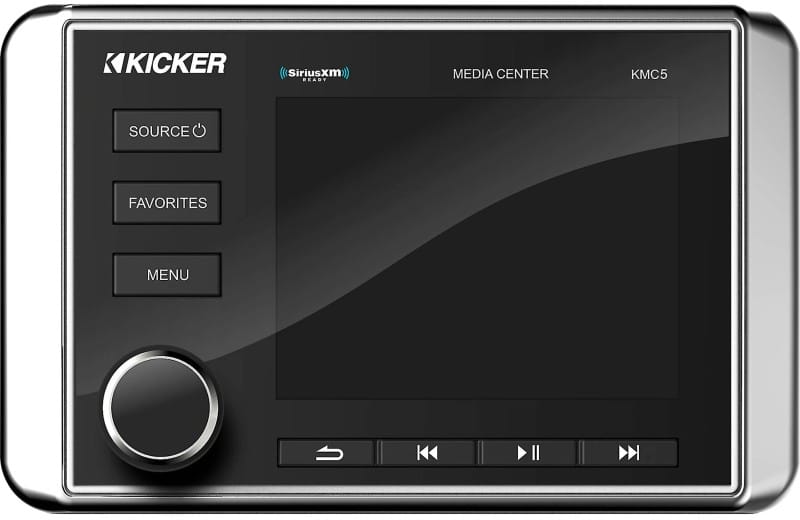
The KMC5 ships with black and chrome trim rings, so your installer can match the radio’s style to the rest of the helm.

Upgrade Your Boat with the KICKER KMC5 Today!

If you are in the market for a full-featured multimedia radio for your boat, or even a side-by-side or UTV, then drop by a local authorized KICKER retailer today and ask about the KMC5 radio. You can find a KICKER dealer near you by using the locator tool on their website.

Be sure to follow KICKER on Facebook, Instagram, and YouTube to learn more about their impressive car audio, marine, motorcycle, powersport and lifestyle product offerings.

This article is written and produced by the team at www.BestCarAudio.com. Reproduction or use of any kind is prohibited without the express written permission of 1sixty8 media.
Filed Under: ARTICLES, Marine Audio, Products, RESOURCE LIBRARY Tagged With: KICKER

Product Spotlight: Rockford Fosgate P2V2-69HO

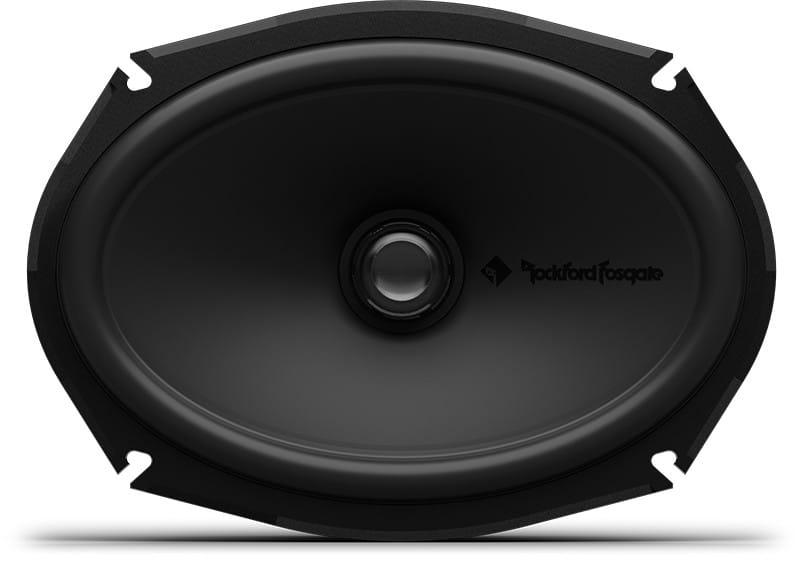
Rockford Fosgate P2V2-69HO

Since the 2025 SEMA show in Las Vegas, Rockford Fosgate fanatics have been talking about the new Punch series speakers. We’ve already taken a look at the P1V2-65 coaxial and P2V2-65 convertible component set. In this spotlight, we are going to check out the High Output convertible 6×9-inch P2V2-69HO set.

Features of the Rockford Fosgate P2V2-69HO

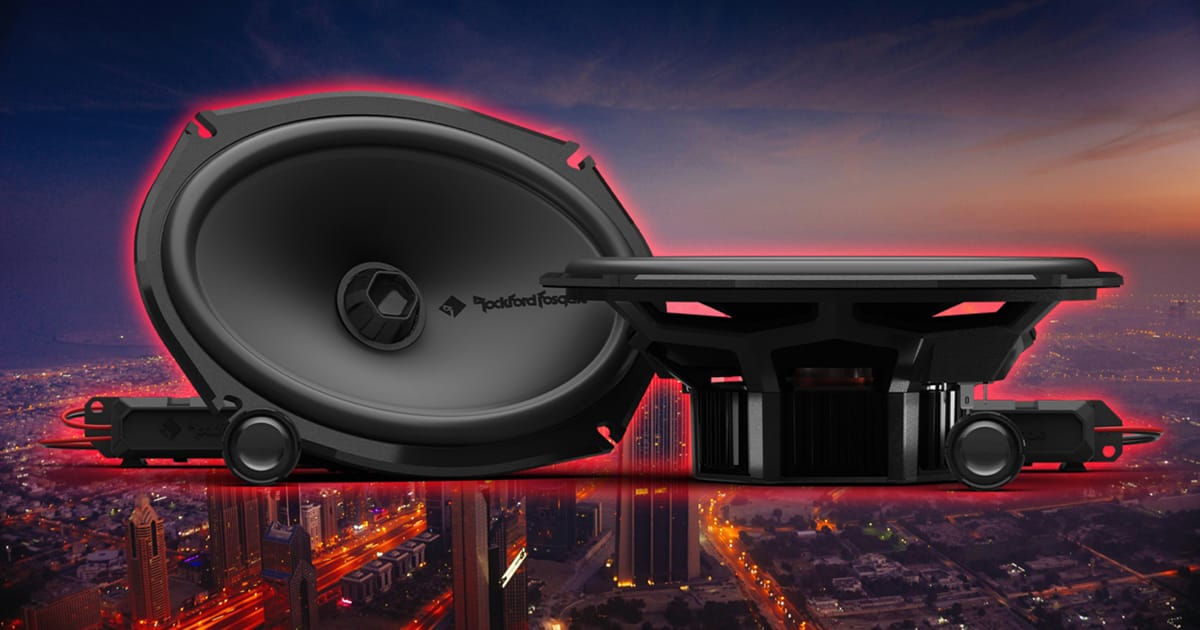
Let’s back up a second and discuss the new Punch Series of speakers. Whereas before now there were three driver performance levels, the latest Punch Series speakers are grouped into coaxial, convertible components, and three-way kits. The P2V2-69HO set includes two 6×9-inch woofers with coaxially mounted 3/4-inch Tetolon-dome tweeters.

The drivers are based on an injection-molded Nylon basket that’s been reinforced with glass fiber to improve rigidity. The cone is injection-molded polypropylene with mica added for damping and thermal stability. The cone shape is curvilinear to help quell resonances and enhance clarity. At the top edge is a durable Santoprene rubber surround featuring VAST 2.0 technology to increase the driver’s effective cone area. The larger cone area equates to greater efficiency compared to competing brands.

At the base of the cone is a linear Nomex spider to which the tinsel leads are sewn to keep them quiet. The voice coil is formed from Kapton to ensure the assembly can handle the as-rated 75 watts of continuous power, with peaks up to 150 watts.

Rockford Fosgate P2V2-69HO
The P2V2-69HO features a mica-damped polypropylene woofer cone and durable Santoprene rubber surround.

The set doesn’t include grilles, but surface-mount units are available as an option with part number GS-69.

Convertible Component Tweeter

As mentioned, this is a convertible component set. This means that the tweeter can be removed from the center of the woofer and mounted separately in the vehicle. For example, if you have a late-model pickup truck, the woofer can go into the stock location in the door, and the tweeter can be installed in the dash, sail panels, or A-pillars. The set includes flush- and A-pillar mount tweeter cups.

Each cup has pigtails to connect to the included passive crossover network. While we are on the topic, the external crossovers have 0 and -3 dB input connections, so your installer can choose whichever better balances the response of the audio system. When the tweeters are mounted in the woofers, a built-in capacitor acts as the filter.

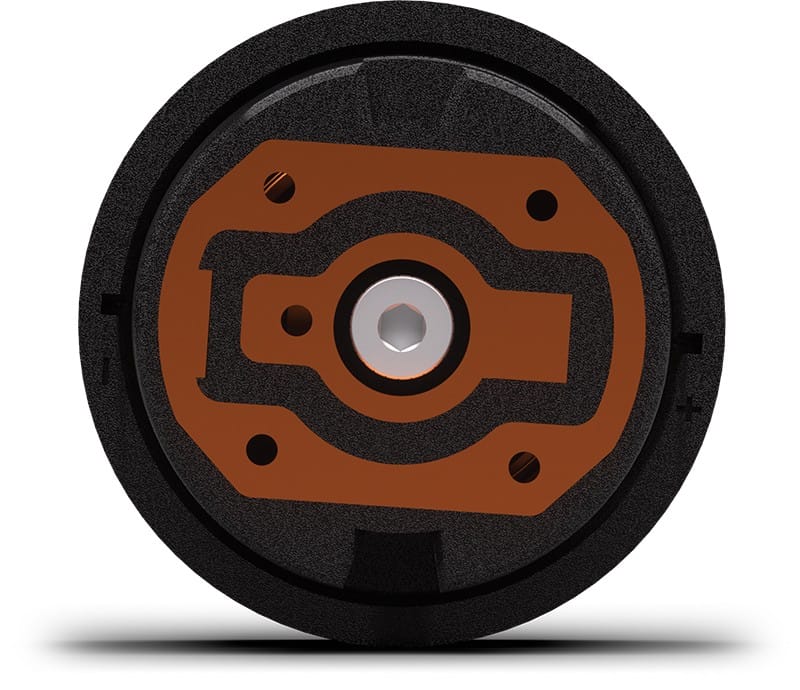
Rockford Fosgate P2V2-69HO
The removable tweeter has traces on the bottom that connect to terminals in the surface-mount or A-pillar cups.

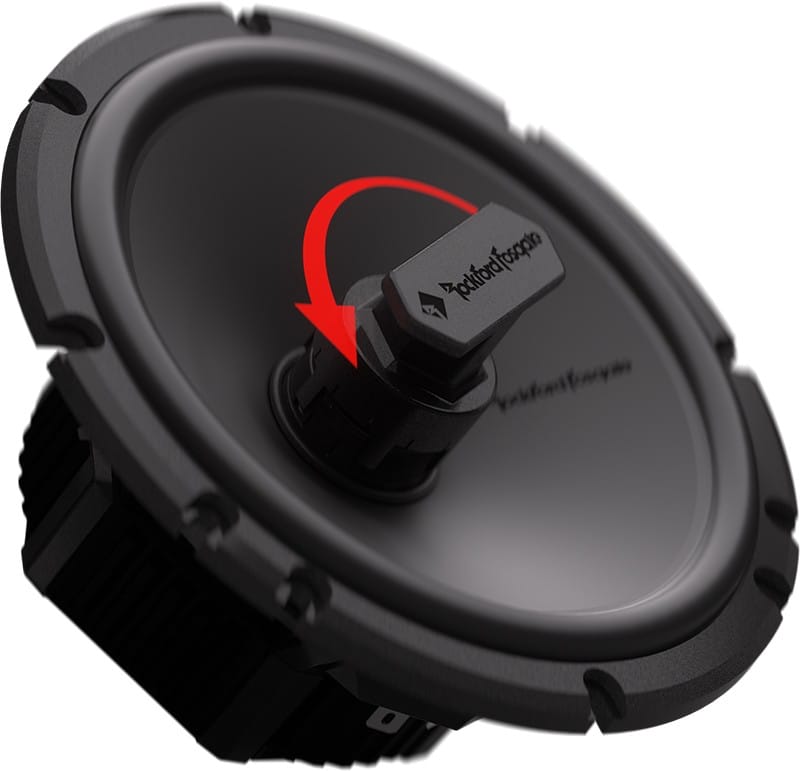
Once the tweeters have been removed, your installer can quickly and easily fit the included phase plugs thanks to the Interchangeable Locking Mechanism (ILM) design. Basically, the tweeters and plugs have a twist-and-lock design that’s executed using the provided tool.

Rockford Fosgate P2V2-69HO
The Interchangeable Locking Mechanism makes it easy for your installer to convert the P2V2-69HO from a coaxial to a component speaker set.

High-Output Design

So, what does Rockford Fosgate mean when they say this is a High Output set? If you look at the specs on the website, you’ll see the P2V2-69 and P2V2-69HO have nearly identical specifications. So, what gives? The HO speakers, which are also available in 6.5- and 6×8-inch sizes, feature a two-ohm voice coil rather than the four-ohm design of the non-HO models.

Why offer two-ohm drivers? It takes power to make sound. The more power you have, the louder the system can play. Rockford Fosgate specifically created these speakers because this is what typical OEM audio systems employ. For OEM systems that use small factory amplifiers, they use lower impedance speakers to get the power needed to drive the system properly. Also, if you have a small amplifier or are using a radio to drive the speakers, the lower impedance will allow the amp to deliver more current and produce more power.

A word of advice: if your amp can deliver more than 60 or 70 watts per channel into a four-ohm load, go with the regular non-HO drivers. The extra power generated by the lower impedance of the HO solutions will exceed the speaker’s power handling rating.

Driver Dimension Optimization

Rockford Fosgate has put significant effort into designing the baskets for the P2V2-69HO and its non-HO brother. They call this their Auto Fit Architecture, and as the name implies, the mounting holes are optimized to fit as many vehicle applications as possible.

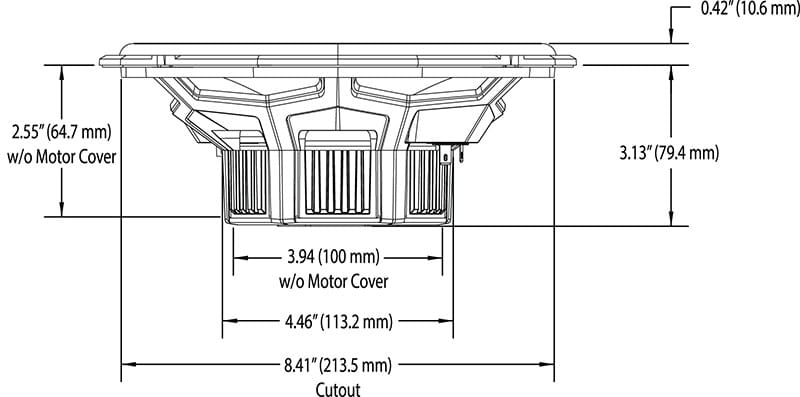
The mounting depth of the set is 3.13 inches with the magnet cover in place. If depth is an issue, the cover can be removed to shorten the speaker to 2.55 inches.

Rockford Fosgate P2V2-69HO
The motor cover can be removed from the P2V2-69HO (and other P1/P2/P3 speakers) to reduce mounting depth requirements.

Upgrade With Rockford Fosgate Punch P2 Speakers Today!

If you are searching for a high-quality 6×9 speaker to work with a small amplifier or the amp in a radio, then drop by a local authorized Rockford Fosgate retailer today and ask for a demonstration of the new P2V2-69HO convertible speaker set. We’re sure you’ll be impressed! Speaking of impressive, all the new Punch speakers come with a 2-year warranty.

You can find a dealer near you using the Dealer Locator tool on the Rockford Fosgate website. We’ve seen lots of great new products from our friends in Tempe over the last year, and we know there is more to come. Stay up to speed with the latest releases by following them on Facebook, Instagram and, of course, YouTube.

This article is written and produced by the team at www.BestCarAudio.com. Reproduction or use of any kind is prohibited without the express written permission of 1sixty8 media.
Filed Under: ARTICLES, Car Audio, Products, RESOURCE LIBRARY Tagged With: Rockford Fosgate

Everything You Need To Know About SiriusXM Satellite Radio

SiriusXM Satellite RadioIt seems you can’t go anywhere these days without hearing or seeing evidence of SiriusXM Satellite Radio. Satellite radio is touted as a commercial-free entertainment solution that can be accessed almost anywhere in North America. With more than 175 channels of music, comedy, sports and talk radio available 24 hours a day, there is always something to listen to. Let’s look at the how satellite radio began, how it works and why it has been so popular.

The Early Days of Satellite Radio

XM Satellite Radio evolved from the American Mobile Satellite Corp. AMSC was a consortium of companies that wanted to use satellite technology to broadcast telephone, data and fax information around the country. In 1992, AMSC formed the American Mobile Radio Corp. to develop a satellite-based digital radio service. AMRC was spun off from AMSC in 1998 as XM Satellite Radio. XM Radio was first to broadcast, launching on Sept. 25, 2001.

In 1990, Sirius Satellite Radio set out to attract customers and vehicle manufacturing partners to its proposed music service. After years of planning, development and licensing, Sirius launched three satellites in July 2000 and started broadcasting in January 2002.

Satellite radio was the hot ticket in the early the early 2000s, and partnerships with automakers were crucially important to each company. Sirius gained the support of Ford, BMW and Chrysler, while XM had General Motors, Honda and Toyota on board.

Satellite Radio Company Merger

SiriusXM Satellite RadioIn January 2005, the New York Post announced that Sirius and XM would merge into a single company on Feb. 19, 2007. The combined companies had about 14 million subscribers, but neither company had posted a profit. The result of the merger was SiriusXM – the brand we have now.

SiriusXM is now integrated into 75 percent of the new car market, with roughly 40 percent of those vehicle owners becoming subscribers. As of late 2017, there are about 32 million subscribers.

How Satellite Radio Works

Satellite radio is actually a very simple broadcasting system. The company has its main studios in Rockefeller Center in New York City and in Washington, D.C. Secondary facilities are in Los Angeles, Nashville and Memphis. The company plays music from its extensive catalog and has live performance spaces to host musicians and performers from all genres.

The information is broadcast to a set of satellites above the Earth that rebroadcast that information back to Earth. The broadcast covers most of North America. The satellite radio receiver in your vehicle (car, truck, boat or aircraft) uses a compact antenna to pick up the signal and extract the channel of audio you want to enjoy.

They Really Have Satellites?

SiriusXM Satellite RadioWhether it’s a live performance, your favorite music or a great discussion about religion or politics, all of the information is combined into a complex digital signal that is transmitted to a set of five active satellites that cover North America. XM-2 and XM-5 are in a geostationary position above the Earth. That is to say, they stay in the same relative position all the time. Positioned about 22,370 miles above the Earth, the satellites relay broadcast information from the studio transmitters to all of North America, excluding the left half of Alaska. XM-2 covers the west side of the country while XM-3 covers the east.

The Sirius satellites also operate in geostationary orbits. Sirius FM-6 covers the West Coast while Sirius FM-5 is located south of New Orleans to cover the East. Early Sirius satellites (Sirius 1, Sirius 2 and Sirius 3) crossed the planet in a figure 8 pattern that had two of the three over North America at any time.

As you can see, there have been many satellites over the almost 20 years of satellite radio. In total, nine have been launched, with the most recent being Sirius FM-6 on Oct. 25, 2013. Sirius FM-6 was the first to broadcast both Sirius and XM transmission frequencies.

The Benefit of Satellite Radio

SiriusXM Satellite RadioSo, what’s the big deal? Why do people gravitate toward satellite radio? The answer comes from its coverage. You can make a road trip from Miami, up to Montreal, across to Vancouver then down to San Diego without having to change the station. If you want to listen to Howard Stern for the entire 90 hours of driving, you most certainly can.

Conventional terrestrial broadcasts (AM and FM radio) are limited in their coverage areas. In fact, the FCC regulates the strength of the signal (to 70 dBu, or decibels relative to one microvolt per meter of signal strength). That way, a station frequency can be re-used again in a relatively nearby location. The actual distance varies because of atmospheric conditions but usually covers 75 to 100 miles from the transmitter. Because each station is responsible for its own content, if spaced perfectly, you’d need to change stations between 60 and 80 times. In reality, you’d need likely a few thousand attempts to find a station that was playing the type of music you wanted.

More Than Just Cars and Trucks

SiriusXM Satellite RadioSiriusXM satellite radio services have been synonymous with marine entertainment systems since they launched. Many people have cottages or camps in very remote areas that have few if any radio stations at all, so being able to enjoy their favorite genre of entertainment is fantastic. Likewise, receivers such as the SiriusXM Sound Station let you enjoy music in your home.

Things You Didn’t Know SiriusXM Could Do

Most of us are used to having satellite radio entertainment in the car, but there are several other applications for the system as well. Many aircraft, both small and large, can get weather and location information using a SiriusXM Aviation receiver. In fact, many Garmin aviation-specific products have the SXM receiver built in.

SiriusXM Satellite RadioSiriusXM Marine provides weather information including lighting strike locations and radar, fishing information and more. Many Garmin, Raymarine, Simrad, Lowrance, B&G and Furuno devices are compatible with SiriusXM Marine.

SiriusXM Music for Business offers entertainment solutions that are tailored to different business types. Serve Happy covers restaurants and bars, and Shop Happy is designed for retail stores. There are channels for waiting rooms, spa and fitness businesses, banks and even music dedicated to use when clients must be put on hold on the phone.

Currently only available on OEM source units, SiriusXM Traffic and Travel Link provide traffic flow information as well as local weather, fuel prices, sports scores and even movie listings. Traffic information mimics that of terrestrial RDS-TMC services in major urban areas.

The Cost of SiriusXM Satellite Radio

SiriusXM Satellite RadioWith the need to replace satellites roughly every 15 years, license music, pay hosts and celebrities, SiriusXM requires a subscription to access its services. In the U.S., prices start at $10.99 a month for 80 basic channels. If you want some of the artist-specific channels and MLB, NBA and NHL coverage, that rises to $15.99. To add Howard Stern, NFL and NASCAR coverage, the price is $19.99. Adding the ability to stream Sirius XM to your computer increases any of the above by $4 a month.

Enjoy the Entertainment You Want, Almost Anywhere

Whether you are in downtown New York or venturing to Supai, Arizona (the most remote community in the contiguous U.S.), enjoying your music is easy with SiriusXM satellite radio. If your vehicle doesn’t already have a satellite radio receiver, drop by your local mobile enhancement retailer and ask about your options to add SiriusXM.

This article is written and produced by the team at www.BestCarAudio.com. Reproduction or use of any kind is prohibited without the express written permission of 1sixty8 media.
Filed Under: ARTICLES, Car Audio, RESOURCE LIBRARY

Product Spotlight: JL Audio AP600/6

JL Audio AP6006

A few decades ago, amplifiers designed for marine applications were not only huge but also inefficient and, crucially, not truly waterproof. Things have come a long way since then, and JL Audio has recently introduced a new series of products specifically for high-performance marine and powersport applications. In this spotlight, we’ll look at the new JL Audio AP600/6 amplifier.

Introducing JL Audio AP Amplifiers

Before we dive into the specifics of the AP600/6, let’s look at the features common to the entire AP Series of products. These amplifiers were designed to provide ultra-reliable performance in marine, powersport and even motorcycle applications. They are completely free of analog controls that might require removable panels or plugs. How did they accomplish this? The amplifiers use a digital signal processor for sensitivity, crossover, bass boost, infrasonic filter, and polarity adjustments. The up and down arrow and Mode/CH buttons on the front panel, combined with a simple dot-matrix display, make it easy for your installer to complete the configuration process. With the amplifier completely sealed, it has an IP67 water and dust intrusion rating.

The AP Series includes four products: the four-channel AP300/4, rated for 50W x 4 into four ohms or 150W x 2 into a pair of four-ohm bridged loads; the monoblock AP300/1, which can deliver 300 watts into a two-ohm load; and the impressive AP600/6, a staggered power six-channel amp. There is also an amp called the AP200/4BT. This amp is rated a 4 x 40 watts into four ohm and includes a BT audio streaming receiver and a controller to adjust volume, track selection or source (BT or Aux input).

JL Audio AP200/4BT
The JL Audio AP200/4BT is a four-channel amp with Bluetooth A2DP and AVRCP.

JL Audio AP600/6 Specifications

The six-channel AP600/6 is rated to deliver 50 watts per channel into four ohms for the four main outputs and 100 watts per channel to channels five and six. These last two channels can be bridged to provide 300 watts into a single four-ohm load. At 2 ohms, the main channels deliver 75 watts, and channels five and six deliver 150 watts each. The amp isn’t designed to drive a two-ohm load in mono. This is an ideal solution for marine applications with four main speakers and two tower speakers, or could be used with two towers and a subwoofer – just to name a few configurations.

Additional specifications include a CTA-2006-D-compliant signal-to-noise ratio of better than 70 dB when referenced to 1 watt of output from 20 Hz to 20 kHz. Frequency response is listed as being 20 Hz to 20 kHz with a tight tolerance of 1 dB. Idle current is between 1 and 1.5 A, and dark current is specified to be under 1 mA. The six-channel amp has low- and high-voltage signal input ranges that accept 0.2 to 2 or 0.8 to 8 volts RMS.

All three pairs of channels can be run full-range or have high- or low-pass filters applied. The filters in the amp use second-order -12 dB/octave slopes and are adjustable from 20 to 500 Hz. The bass boost is centered nice and low at 37 Hz and can boost around this frequency by up to 18 dB. The AP600/6 has an adjustable infrasonic filter on channels five and six that’s adjustable from 20 to 50 hertz with a second-order slope. This amp doesn’t have a polarity reverse adjustment in the menu.

The amp has an Easy Tune mode that allows it to work with select Fusion source units with DSP and the Fusion Audio smartphone app.

JL Audio AP6006
A dot-matrix display on the front panel makes setting up the amp easy for your installer.

Connections and Installation

Electrical connections are on pigtails at either end of the amp. The left side has six pairs of 18-AWG speaker-wire connections, along with a remote turn-on connection and an 8-AWG connection. These connections are 10 inches long. The right side has three pairs of RCA jacks and a factory service USB port connection. The amp doesn’t have a built-in over-current protection device, so your installer should install a 70-amp fuse on the end of the power wire. Four-AWG should be run to the battery connections to ensure efficient operation.

Footprint-wise, the AP600/6 measures 11.81 inches (30 cm) long, 5.9 inches (15 cm) wide, and is 1.86 inches (4.7 cm) thick. These dimensions exclude the wires and their injection-molded strain reliefs. The amp mounts using the provided M4 x 35mm (approx. #8 x 1-3/8) fasteners that pass through the corners of the cast aluminum heatsink.

Upgrade Your Marine or Powersports Application with JL Audio AP-Series Marine Amps Today!

Whether you are shopping for a small amp with a Bluetooth receiver to power a system in your fishing boat, or you want a higher-power solution like the AP600/6 for a small cruiser, the new AP Series of amplifiers from JL Audio should have what you need. Drop by a local authorized retailer today. You can find out more about the AP Series amplifiers by visiting the Garmin website.

Be sure to follow JL Audio on Facebook, Instagram or YouTube to learn more about their impressive automotive, marine, and powersport solutions.

This article is written and produced by the team at www.BestCarAudio.com. Reproduction or use of any kind is prohibited without the express written permission of 1sixty8 media.
Filed Under: ARTICLES, Marine Audio, Products, RESOURCE LIBRARY Tagged With: JL Audio

Product Spotlight: ADS iDatalink Maestro APX Kits

Maestro APX

In February of 2025, Automotive Data Solutions (ADS) introduced the world to a new way of installing car radios. In their presentation, they discussed how aftermarket source unit installations evolved from under-dash to DIN and, subsequently, 2-DIN shapes. Their iDatalink Maestro APX kits, when combined with radios from JVC and Kenwood, usher in a new philosophy in radio upgrade options. Let’s check out the iDatalink Maestro APX installation kits.

The Basics of Radio Installations

Up until now, if you wanted to replace a factory-installed radio, you had a choice between DIN and 2-DIN radio chassis. An extension of these sizes includes floating-face radios with a large screen mounted on a bracket in front of the dashboard.

ADS spends significant resources cataloging vehicle information as it investigates each platform for remote car starter and vehicle interface solutions. The team noticed that many vehicles share common parts, such as screens. If a radio manufacturer could produce an aftermarket solution, ADS could provide simple installation and integration solutions to allow consumers to dramatically upgrade their cars and trucks in terms of features and performance.

ADS contacted their long-time partners at JVCKENWOOD to ask if they wanted to be the initial source unit partners for the APX Advanced Dash Integration product. ADS and JVCKENWOOD worked together on the initial Maestro RR radio data integration project. The two companies agreed, and work began several years ago on developing the APX kits and compatible radios. As a side note, JVC and Kenwood call their APX-compatible radio family Direct Replacement.

Maestro APX
A Kenwood DAX800XR radio installed in the dash of a 2017 infiniti QX60 SUV using the Maestro APX-S8-IN1 kit.

How Does Maestro APX Work?

In a conventional radio upgrade, a mobile enhancement retailer replaces the factory radio and often the trim panel with aftermarket solutions. The new dash kit has an opening for a single-DIN or, more commonly, a 2-DIN multimedia receiver. Some of these dash kits are complicated and expensive, and have to include new displays and interfaces for climate controls. Due to space limitations on the dashboard, many kits relocate the radio to a lower, less convenient location. Another drawback is that the radio display often shrinks from 8 inches to 7 inches or less. However, vehicle owners can now have state-of-the-art audio playback and smartphone integration, ready for connection to signal processors, amplifiers, and high-quality speakers.

The Maestro APX kits include two components – mounting brackets for a screen and a T-harness. The harness handles connections to the factory wiring and to a Maestro RR or RR2 interface. The brackets allow the new screen included with the Kenwood or JVC radio to mount in or in front of the dash. In short, the new radio replaces the factory screen with a premium source unit.

Maestro APX
A Maestro RR or RR2 handles integration with the factory control and allows the radio to display vehicle information from the CAN bus.

Maestro Floating and Eight-Inch Kits

There are two types of APX kits – APX-FL for floating-face radios and APX-S8 for eight-inch display solutions.

The APX-FL kit, like those for the Jeep Wrangler, allows a radio with a 10.1-inch floating face display to be integrated into the vehicle. Unlike DIN- and 2-DIN floating-face solutions, the radios compatible with the APX-FL kits are a true two-part solution. The radios are designed with a hide-away brain and a screen that attaches with a few harnesses. Depending on the kit, the radio brain may be installed in place of the factory CD mechanism or on the back of the display mounting bracket. Where possible, factory mounting brackets are used, but the Maestro kits include beautifully crafted brackets where needed. Spacer blocks and trim pieces are included so your installer can fit the screen up tight against the dash.

Maestro APX
A Kenwood DAX1050XR installed in a 2014 Ford Edge using the APX-FL-FO1 kit.

The APX-S8 kits are designed for a two-part radio solution that includes an eight-inch screen that replaces the factory screen. Brackets are provided as needed to ensure the new display fits perfectly into the dash. The result, once the upgrade is complete, is that the dash looks just like it did from the factory. All the radio and climate controls continue to function with the new radio, thanks to the Maestro RR or RR2 integration module. The same goes for the radio control buttons on the steering wheel.

Maestro APX
A Kenwood DAX8000S installed in a Ford F-150 dash using an APX-S8-F01 kit.

APX Kit Applications

As of now, ADS offers kits for many Ford, GM, Chrysler, Jeep, Dodge, Ram, Holden, and Infiniti/Nissan vehicles. You can check the ADS Maestro website to see if there’s a Maestro APX radio upgrade solution for your application. A key benefit of the design is that new kits can be created in the future if a compatible platform emerges.

Maestro APX
An example of how the radio brain is installed in place of the factory CD mechanism in a Ford F-150.

The ADS marketing team noted that there are almost five million vehicles on the road globally compatible with their Maestro APX kits, opening up new technology-upgrade opportunities for millions of vehicle owners. If you want to upgrade your car or truck, check the ADS Maestro website for a compatible Maestro APX kit, then choose a JVC or Kenwood radio that meets your needs. From there, an authorized dealer for the radio brand can bring your plan to fruition, and you can enjoy all the features of a modern vehicle in your older car, truck or SUV.

This article is written and produced by the team at www.BestCarAudio.com. Reproduction or use of any kind is prohibited without the express written permission of 1sixty8 media.
Filed Under: ARTICLES, Car Audio, Products, RESOURCE LIBRARY Tagged With: iDatalink Maestro

  • Page 1
  • Page 2
  • Page 3
  • Interim pages omitted …
  • Page 28
  • Go to Next Page »

Primary Sidebar

About Us

About-us

If you live in Berks Country, Pennsylvania, you have dozens of options in terms of where to go for audio system, collision avoidance, remote starter and window tint upgrades for … [Read More...]

Car Audio

V2-Sliders-Car-Audio-A1b

Whether you want the precision of a recording studio, the impact of a concert or both, car audio upgrades from Elite Car … [Read More...]

Window Tinting

Window Tint

Tinting the windows of your car or truck is a great way to add comfort and style to the vehicle. The automotive window … [Read More...]

Remote Car Starters

Remote Starter

Remote Car Starters One of the most popular product categories at Elite Car Customs is remote car starters. Imagine being able to start your vehicle with the push of a button so … [Read More...]

Footer

Location


Get Directions to Elite Car Customs

Connect with Us

  • Facebook
  • Instagram

Services

  • Car Audio
  • Remote Starters
  • Driver Safety
  • Window Tint

Hours

Monday, Tuesday, Wednesday, Thursday, Friday9:00 am – 5:00 pm

Copyright © 2026 Elite Car Customs · Privacy Policy · Website by 1sixty8 media · Log in